TMJ Treatment in Park Ridge, IL
TMJ Treatment in Park Ridge, IL
TMJ disorder (temporomandibular joint disorder) affects the joint that connects your jaw to your skull, causing pain, clicking, and difficulty chewing. At Loukas Dentistry in Park Ridge, IL, Dr. Thanasi Loukas offers TMJ and bruxism treatment, including custom night guards and therapeutic Botox, to help relieve jaw pain and protect your teeth.
Symptoms of TMJ Disorder
- Jaw pain or soreness, especially in the morning
- Clicking, popping, or grinding sounds when opening or closing your mouth
- Difficulty or discomfort when chewing
- Frequent headaches or migraines
- Ear pain or a feeling of fullness in the ears
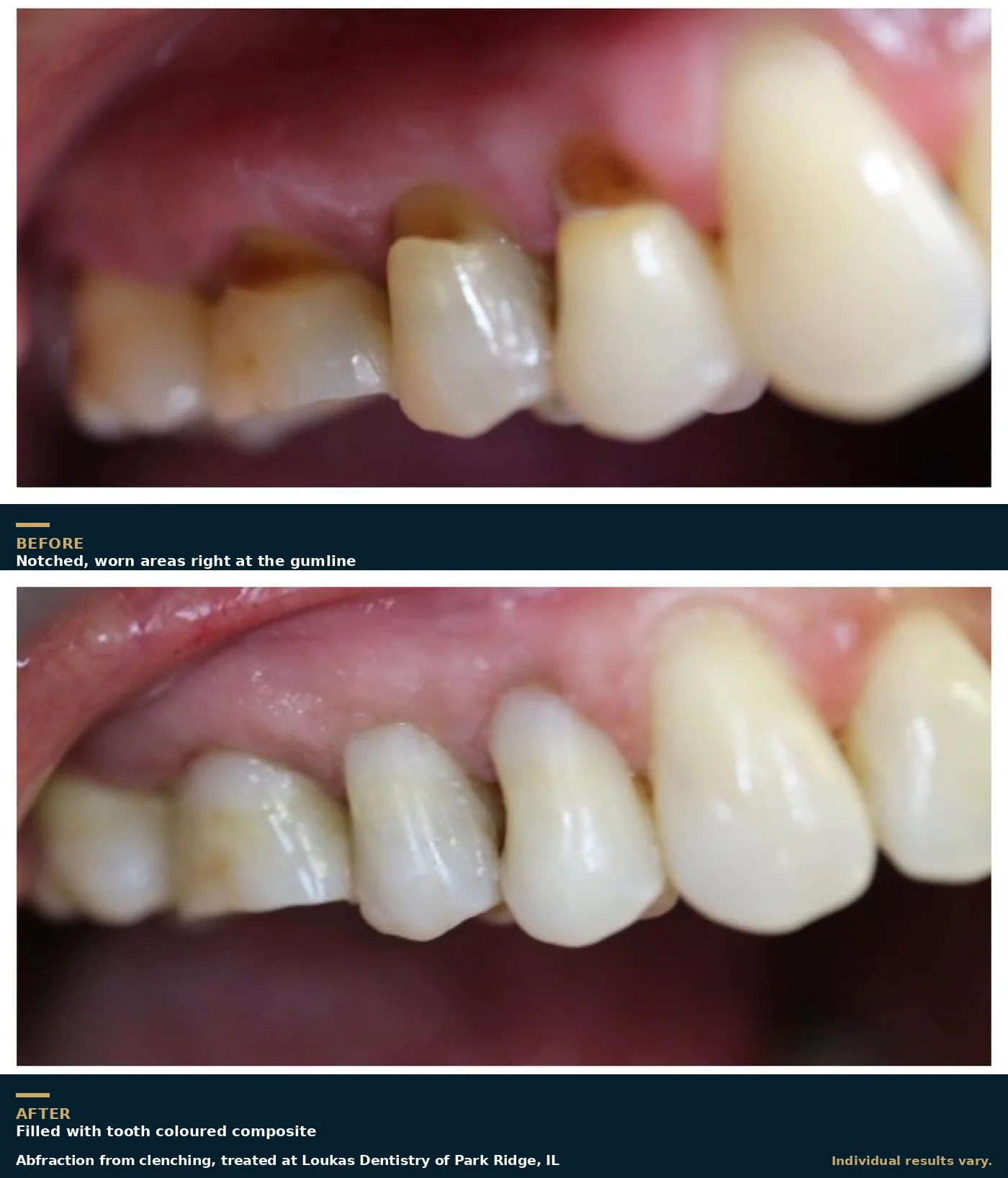
- Worn, chipped, or flattened teeth from grinding (bruxism)
- Neck and shoulder pain
TMJ Treatment Options at Loukas Dentistry
Custom Night Guards
A custom night guard is one of the most effective treatments for bruxism and TMJ disorder. Unlike drugstore guards, ours are made from a digital scan of your teeth for a thin, secure fit that protects your teeth and may reduce jaw muscle strain while you sleep. It does not change your bite, and it is the first step for most patients.
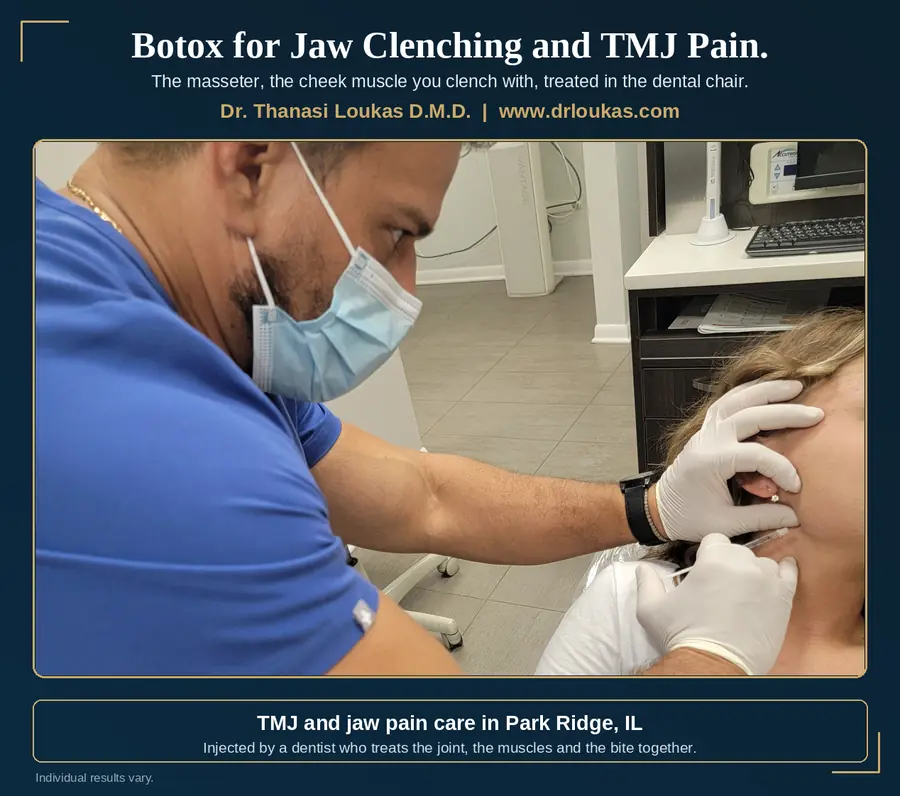
Dr. Thanasi Loukas treats many TMJ cases with therapeutic Botox, easing the muscle activity behind jaw pain and clenching. He completed this injectable training through the American Academy of Facial Aesthetics.
Botox for TMJ and Jaw Pain
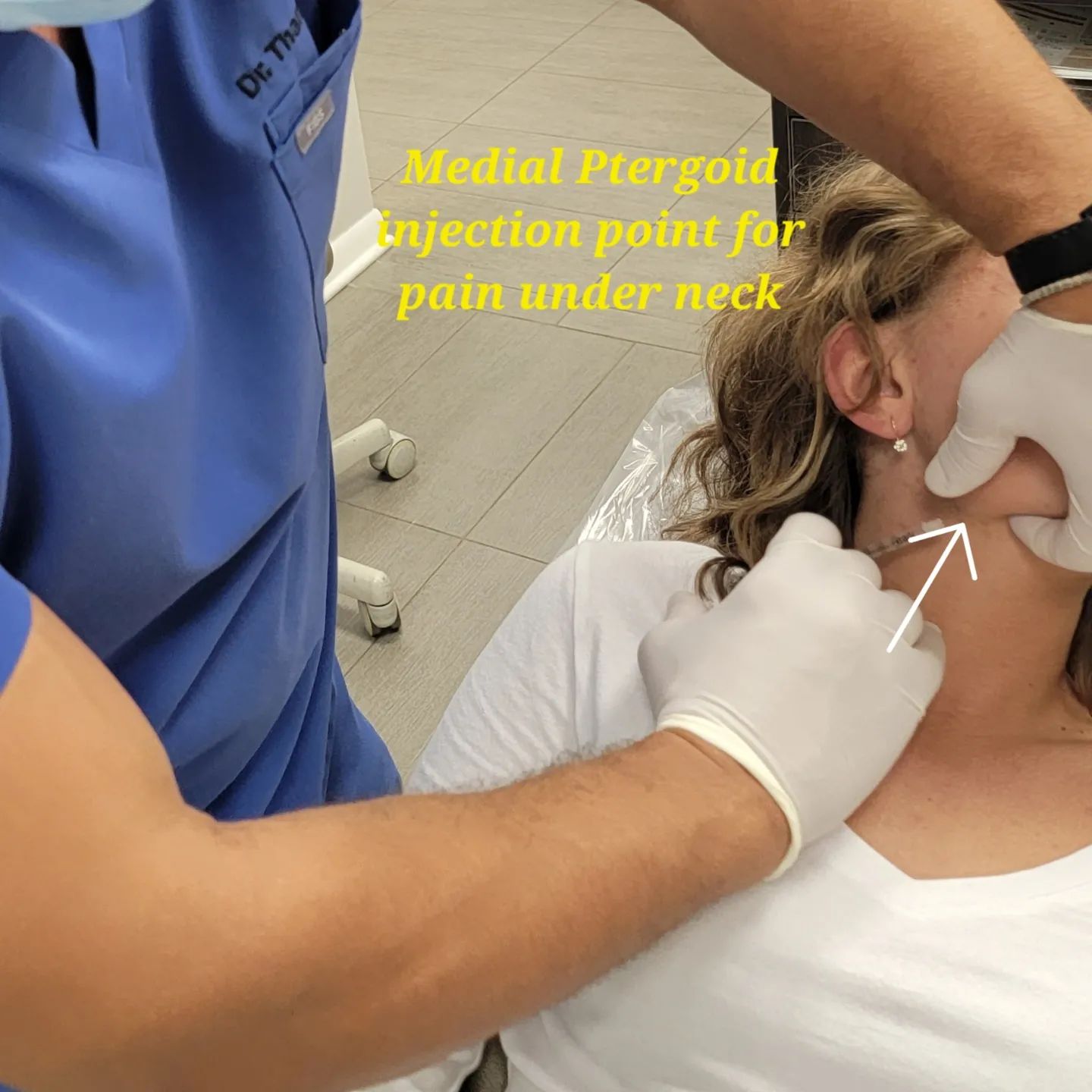
Botox placed into the masseter muscles, the large muscles you chew and clench with, may help reduce jaw clenching, teeth grinding and related headaches. Dr. Thanasi Loukas uses therapeutic Botox for TMJ when clinically appropriate, and relief typically lasts about three to four months per treatment.
Bruxism: Night-Time Teeth Grinding and TMJ Pain
TMJ disorder is often driven by bruxism: grinding or clenching the teeth, usually during sleep. Because it happens at night, many patients don’t know they do it; they simply wake with sore jaws, tight facial muscles or a headache. Over time bruxism can cause chronic jaw, neck and shoulder pain, tooth sensitivity and worn-down enamel.
Common signs of a TMJ or bruxism problem include:
- Headaches, especially in the morning
- Sore chewing muscles or pain when opening wide
- Generalized pain in the teeth or jaw
- Popping or clicking sounds when opening the mouth
- Ringing in the ears
Treatment usually starts conservatively: a custom night guard to stop the teeth from grinding, anti-inflammatory medication when needed, and lifestyle changes that reduce the stress and caffeine that often trigger clenching. Botox for the jaw muscles is an option when guards alone aren’t enough, and in rare cases we refer to a TMJ specialist.
Signs of Grinding Your Dentist Can See
Most grinding happens during sleep, so the first clue is often what we notice at a checkup: flattened or chipped front teeth, cracks in back teeth, worn enamel, or a scalloped edge along the tongue. Daytime clenching is common too, at a desk, in traffic or at the gym. Stress, caffeine, alcohol, sleep apnea and certain antidepressants can all increase grinding. Over the years it may wear teeth short, break fillings and crowns, cause sensitivity and keep the jaw muscles tense, which feeds TMJ pain.
Why Jaw Problems Can Cause Headaches
The trigeminal nerve supplies both the jaw muscles and much of the head and face, so an overworked masseter or temporalis can refer pain to the temples, the forehead and behind the eyes. Some headaches that feel like tension headaches, and some that feel like migraines, start in the jaw muscles. Learn more about Botox for migraines and headaches.
What You Can Do at Home
- Notice your resting position: lips together, teeth apart, tongue resting on the roof of your mouth. Teeth should only touch when you chew or swallow.
- Cut back on caffeine after noon and alcohol in the evening, since both may increase night grinding.
- Apply moist heat to the jaw muscles for 10 minutes, then stretch gently: open slowly to a comfortable width, hold for 5 seconds and repeat.
- Choose soft foods during a flare and skip gum, ice and very chewy foods.
- Sleep on your back if you can, and manage stress with exercise, breathing exercises or counseling, which may reduce clenching.
When the Bite or Sleep Is Part of the Cause
If a high filling or crown is triggering clenching, a small bite adjustment may help. Teeth that are already worn short or cracked can be rebuilt with bonding or crowns so the bite is level again. When grinding is linked to disordered breathing at night, we screen for sleep apnea and can make a sleep apnea oral appliance when clinically appropriate.
Schedule Your TMJ Consultation
If you’re suffering from jaw pain, headaches, or teeth grinding, relief is available. Call Loukas Dentistry at (847) 696-1919 or visit us at 714 W Higgins Rd, Park Ridge, IL 60068 to schedule your TMJ consultation today.
Temporomandibular Joint Disorder: What the Name Actually Means
The temporomandibular joint is the hinge just in front of each ear where the lower jaw meets the skull. It is the only joint in the body that has to work in perfect sync with an identical joint on the other side, and it carries a disc of cartilage between the two bone surfaces. Temporomandibular joint disorder, shortened to TMD or more commonly TMJ, is the umbrella term for pain and dysfunction in that system.
That umbrella covers several different problems with different treatments, which is why a single fix does not exist. The pain may come from the muscles that close the jaw rather than from the joint itself. The disc may be slipping and recapturing, which is what produces a click. The joint surfaces may be showing genuine arthritic change. Or the whole system may be overloaded by clenching and grinding, which is the most common version we see in Park Ridge.
Is There a TMJ Specialist in Park Ridge?
Patients search for a TMJ specialist expecting a separate discipline, and it is worth being straight about this. There is no recognised dental specialty in TMJ the way there is in orthodontics or oral surgery. Care is provided by dentists who have taken additional training in occlusion, muscle pain and jaw function, and by oral and maxillofacial surgeons for the small number of cases that need joint surgery.
What matters is not the label but the sequence. A careful history, an examination of the muscles and the joint, a look at how the teeth meet, and imaging where it is warranted. Conservative treatment first, always. Most temporomandibular joint pain settles with a properly made occlusal guard, muscle care and time, and the small number of cases that need more can be escalated from there.
How We Treat It Here, in Order
- A custom occlusal guard. Made from a scan of your own teeth, not a boil and bite from a pharmacy, which often makes clenching worse by giving the muscles something to fight against.
- Muscle care. Heat, a soft diet through a flare, jaw rest and specific exercises. Unglamorous and genuinely effective.
- Anti inflammatory treatment and, in selected cases, a short course of a muscle relaxant at night.
- Botox into the masseter or the temporalis where the muscle itself is the driver. See Botox for TMJ and jaw pain in Park Ridge, IL.
- Adjusting how the teeth meet, or restoring worn teeth, when the bite is part of the cause rather than a coincidence.
Frequently Asked Questions
What are the common signs of TMJ disorder?
Jaw pain or stiffness, clicking or popping when you chew, headaches, ear pain or fullness, and trouble opening or closing your mouth fully are the most common signs.
How do I know if I grind my teeth at night?
Morning jaw soreness, headaches on waking, tooth sensitivity and a partner who hears it are the common clues. We can also see it in the wear patterns on your teeth at a checkup.
Can a night guard help TMJ pain?
For many patients, yes. A custom guard keeps the teeth from grinding against each other and lets the jaw muscles rest. Relief usually builds over two to four weeks of nightly wear.
How does Botox help with TMJ pain?
Small doses placed into overactive jaw muscles relax them, which may reduce clenching, grinding and the headaches that come with them. Results typically last about three to four months.
Does Botox for TMJ change my face?
Treatment doses relax the chewing muscle rather than freezing it, so expression and chewing stay normal. With repeated treatments the masseter can slim slightly.
Is TMJ disorder permanent?
There is no single cure that fits every case, but most TMJ problems are muscular and respond well to a guard, habit changes and, when clinically appropriate, Botox. True joint damage is uncommon, and even then symptoms can usually be managed without surgery.
Is there a TMJ specialist in Park Ridge?
There is no recognized dental specialty for TMJ. Care comes from dentists with additional training in jaw function and muscle pain, with referral to an oral surgeon in the rare cases that need joint surgery. Dr. Thanasi Loukas evaluates and treats TMJ in our Park Ridge office.
Does insurance cover night guards or TMJ treatment?
Many dental plans cover a custom night guard. Botox for TMJ is usually not covered by insurance, and we give you the cost before treatment.
Read Next
- Botox for TMJ and jaw pain explains how therapeutic Botox works alongside a night guard.
- Botox for migraines and headaches matters because jaw muscle pain and headache overlap more than most patients expect.
- Dental crowns and fillings cover rebuilding teeth that grinding has already worn flat.
- Sleep apnea and snoring treatment, because night time clenching and disordered breathing often travel together.
Call (847) 696-1919 to have your jaw assessed, or request an appointment.
Botox as Part of TMJ Care
For patients whose jaw pain is driven by muscle clenching, Dr. Loukas offers Botox for TMJ and jaw pain in Park Ridge. Relaxing the masseter muscle can ease tension and headaches, and it works alongside a night guard rather than replacing one.