Bone Grafting for Dental Implants in Park Ridge IL
Bone Grafting for Dental Implants — Park Ridge, IL
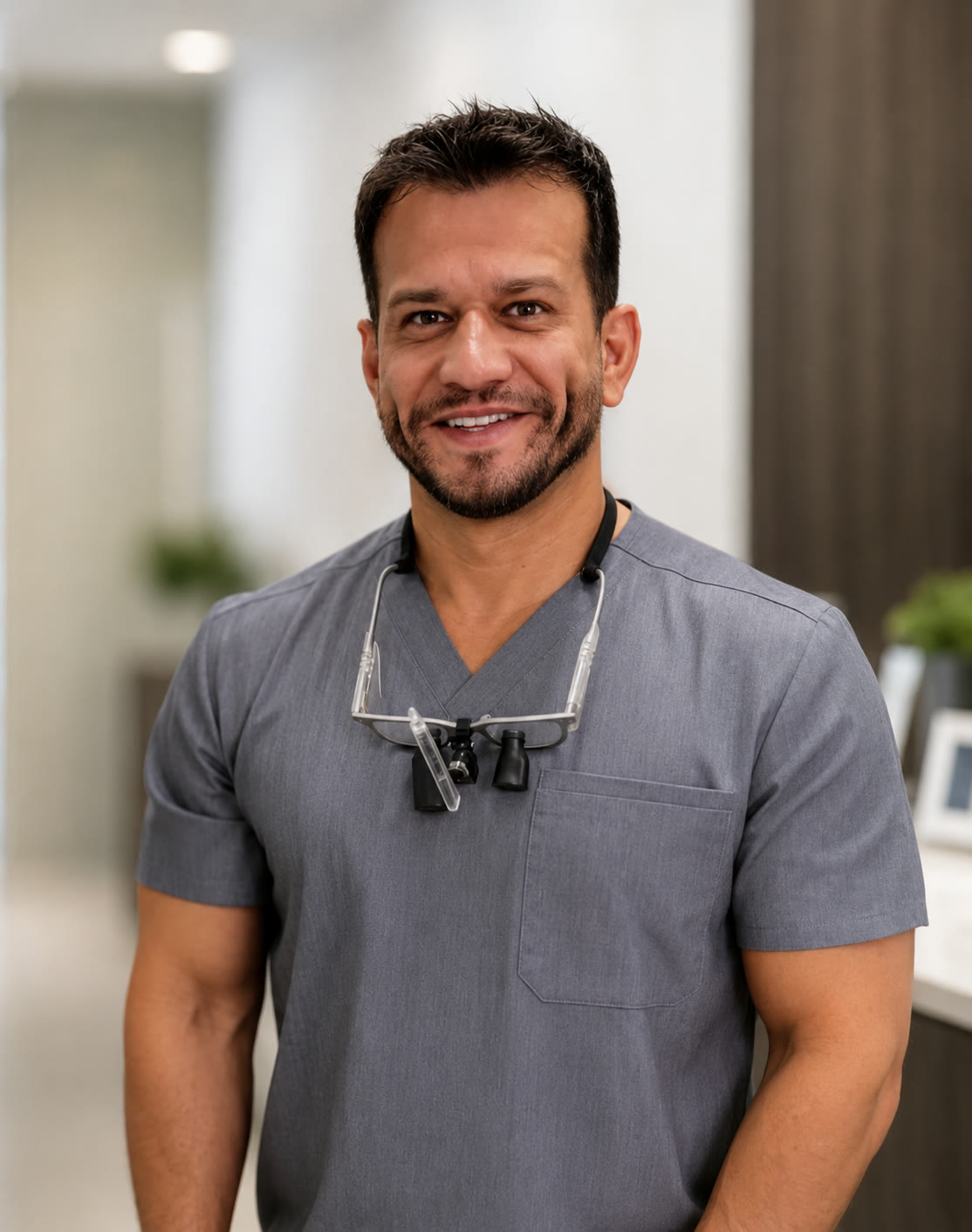
Restore the jawbone needed for successful dental implants. Dr. Thanasi Loukas performs bone grafting in Park Ridge, IL to help patients who have experienced bone loss regain a strong foundation for implant placement.
What Is Bone Grafting?
Bone grafting is a surgical procedure that rebuilds or augments the jawbone to provide a strong, stable foundation for dental implants. When a tooth is lost or extracted, the surrounding bone begins to resorb (shrink) over time. Without sufficient bone volume, a dental implant cannot be placed successfully.
Bone grafting and implant placement are performed in our own office by Dr. Thanasi Loukas, whose surgical training includes an oral surgery externship he founded at the Edward Hines Jr. VA Hospital and continuing education in the Hiossen implant system. Completing grafting and implant work under one roof keeps your treatment coordinated.
Dr. Thanasi Loukas performs bone grafting in-house at Loukas Dentistry of Park Ridge, eliminating the need for a separate oral surgeon referral. This means your entire implant journey — from bone grafting through final crown placement — is completed in one familiar, trusted office.
Types of Bone Grafts We Perform
Socket Preservation Graft (Ridge Preservation)
Performed immediately after a tooth extraction, a socket preservation graft fills the empty socket with bone graft material to prevent bone loss. This is the most common type of bone graft and is highly recommended for patients who plan to get a dental implant in the future.
Sinus Lift (Sinus Augmentation)
When placing implants in the upper back jaw, the sinus cavity may be too close to the jaw to allow for proper implant length. A sinus lift procedure adds bone below the sinus membrane to create adequate bone height for implant placement.
Block Bone Graft
For patients with significant bone loss, a block bone graft uses a small piece of bone (often from the patient’s own jaw) to rebuild the deficient area. This is typically used when there is a large horizontal or vertical bone deficiency.
The Bone Grafting Process at Loukas Dentistry
- Consultation & Imaging — 3D cone beam CT scan to assess bone volume and plan the graft
- Graft Placement — Performed under local anesthesia; graft material is placed and secured
- Healing Period — 4–6 months for the graft to integrate with your natural bone
- Implant Placement — Once the bone has healed, the dental implant is placed
Bone Graft Materials
Dr. Loukas uses only FDA-approved, clinically proven bone graft materials. Options include:
- Autograft — Bone taken from your own body (most biocompatible)
- Allograft — Processed human donor bone (most commonly used)
- Xenograft — Bovine (cow) bone mineral (excellent long-term results)
- Alloplast — Synthetic bone substitute materials
Frequently Asked Questions About Bone Grafting
Is bone grafting painful?
Bone grafting is performed under local anesthesia, so you will not feel pain during the procedure. Mild soreness and swelling are normal for a few days afterward and are well-managed with prescribed or over-the-counter pain medication. Most patients return to normal activities within a few days.
How long does bone grafting take to heal?
Most bone grafts require 4–6 months to fully integrate before an implant can be placed. Socket preservation grafts performed at the time of extraction may heal in as little as 3–4 months. Dr. Loukas will monitor your healing with follow-up X-rays and determine the optimal time for implant placement.
How much does bone grafting cost in Park Ridge, IL?
Bone graft costs range from $300 for a simple socket preservation graft to $3,000+ for a sinus lift. Many dental insurance plans offer partial coverage for bone grafting when it is medically necessary. We also offer financing through CareCredit. Your exact cost will be provided at your free consultation.
Do I need bone grafting before a dental implant?
Not all patients need bone grafting. Dr. Loukas will evaluate your bone density and volume using 3D imaging during your free implant consultation. If you have adequate bone, you can proceed directly to implant placement. If bone grafting is needed, it is a routine procedure with excellent success rates.
Start With a Free Consultation
📍 714 W Higgins Rd
Park Ridge, IL 60068
Related Services
Frequently Asked Questions