Botox for Migraines and Chronic Headaches in Park Ridge, IL

Botox & Facial Aesthetics

Botox for Migraines and Chronic Headaches in Park Ridge, IL

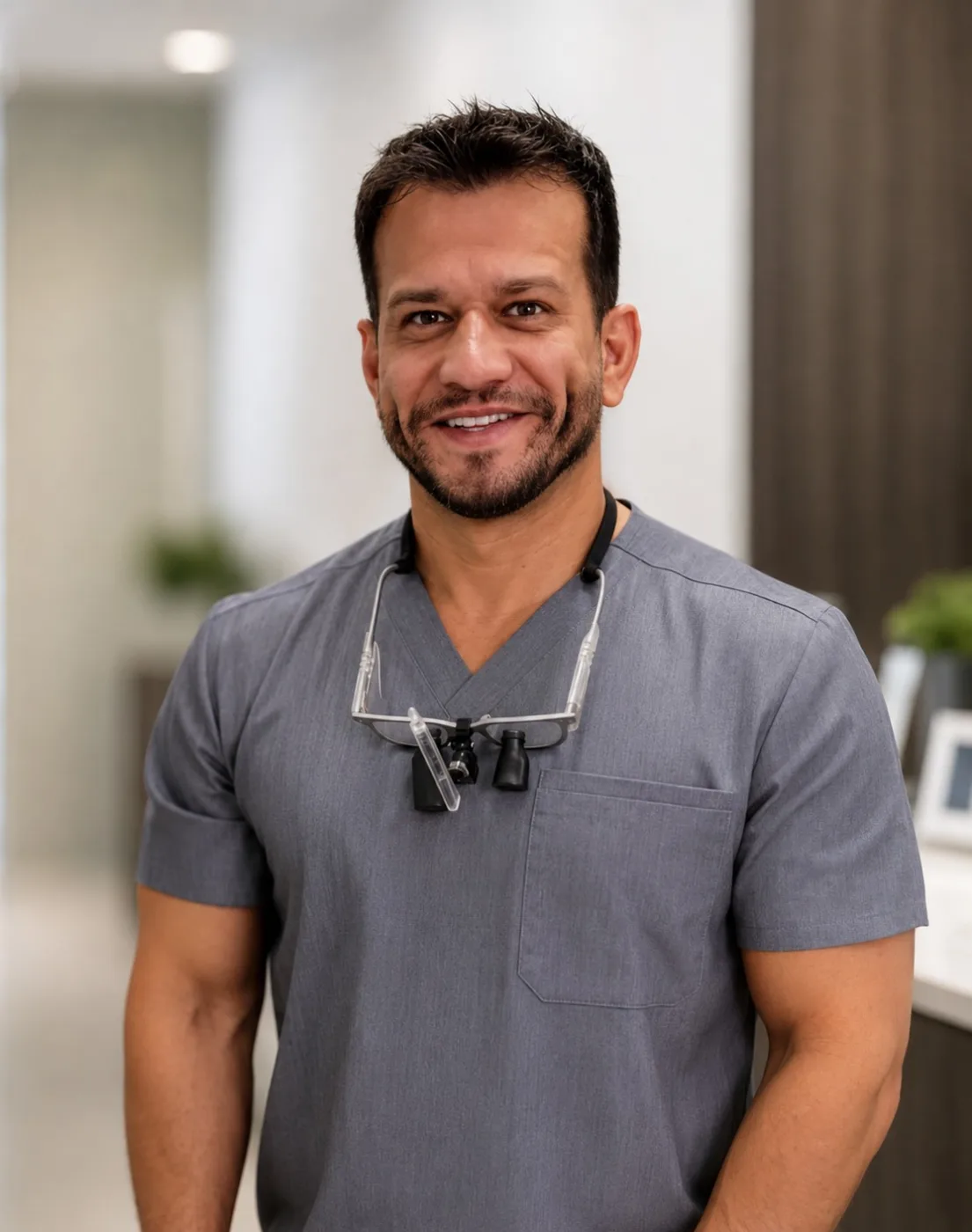
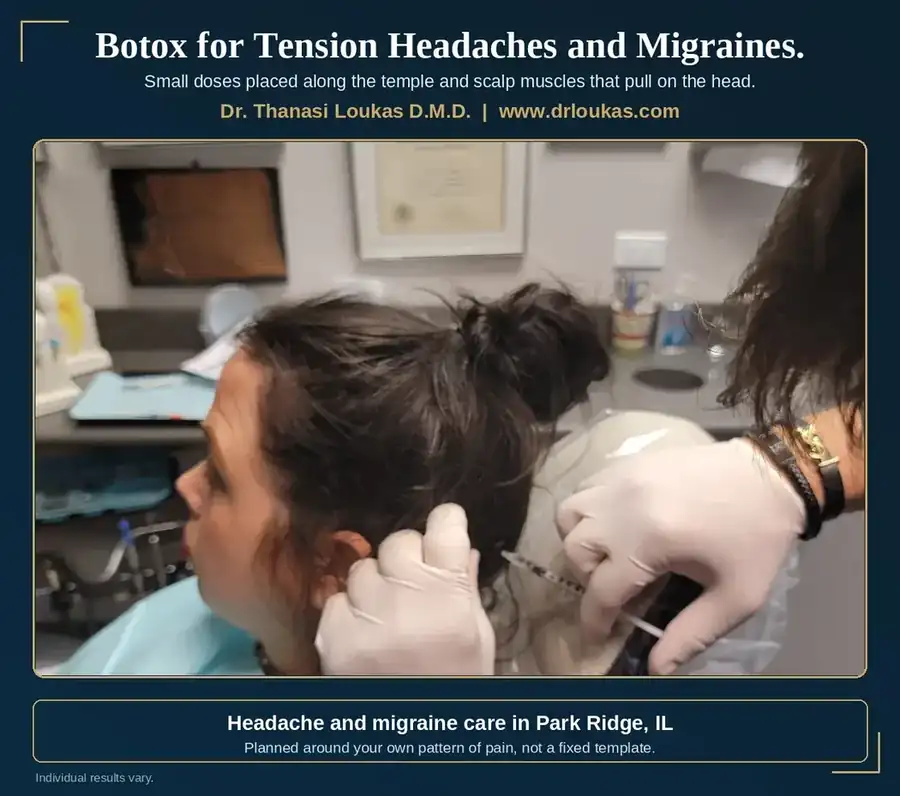
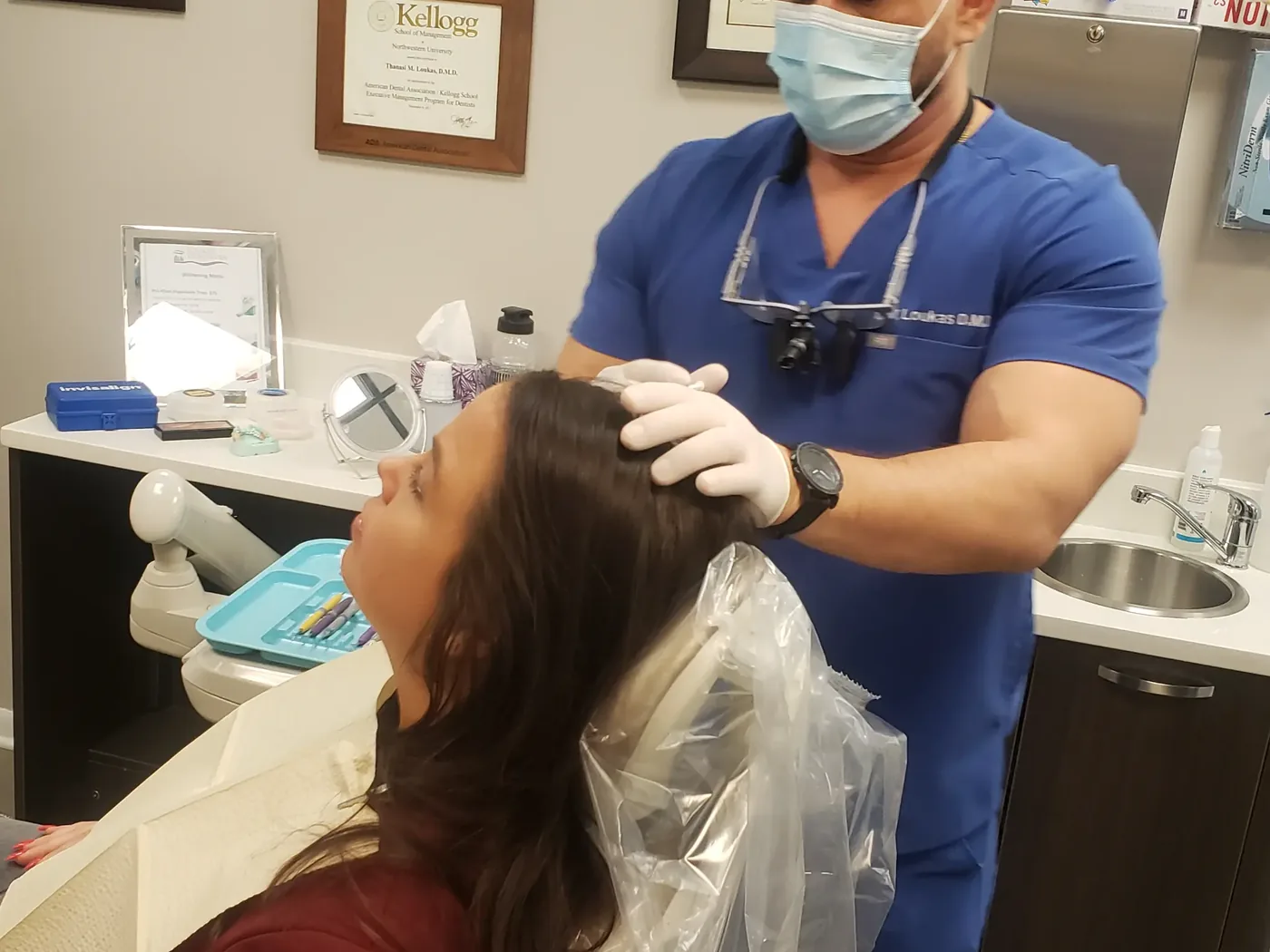
Botox migraine injection points performed by Dr. Thanasi Loukas at Loukas Dentistry Park Ridge IL

Botox migraine injection points — Dr. Thanasi Loukas, DMD — Loukas Dentistry of Park Ridge

If you suffer from chronic migraines or frequent tension headaches, you may have already tried medications, lifestyle changes, and specialist visits — with limited relief. Botox has emerged as one of the most effective, FDA-approved treatments for chronic migraine prevention, and many patients are discovering that a dentist who already works with facial anatomy and jaw mechanics is uniquely positioned to deliver it.

At Loukas Dentistry of Park Ridge, Dr. Thanasi Loukas offers Botox for chronic migraine and headache prevention as part of a comprehensive facial aesthetics program. As a dentist with advanced training in facial anatomy, temporomandibular joint function, and neuromuscular dentistry, Dr. Loukas brings a clinical perspective to headache treatment that goes beyond what most injectors can offer.

37M
Americans affected by migraines

~50%
Reduction in migraine days with Botox

3 mo
Duration of each Botox treatment

What Is Botox for Migraines?

Botox (botulinum toxin type A) was FDA-approved for chronic migraine prevention in 2010 under the brand name BOTOX® Therapeutic. It is a separate indication from cosmetic Botox, though the injection technique and product are similar.

For migraine treatment, Botox is injected into specific muscle groups around the head, face, and neck. It works by blocking the release of neurotransmitters that activate pain networks — specifically, it prevents the signaling that causes the sensitization of the trigeminal nerve pathway, which is central to migraine pathophysiology.

The result is fewer migraine days, reduced severity when migraines do occur, and in many patients, longer stretches of complete relief over successive treatment cycles.

Important distinction: Botox for chronic migraine is a preventive treatment, not a rescue medication. It reduces how often migraines happen — it does not stop a migraine once it has started. Most patients begin noticing results after their second or third treatment cycle.

Who Qualifies for Botox Migraine Treatment?

Botox is FDA-approved for adults who experience chronic migraine, defined as:

  • 15 or more headache days per month
  • At least 8 of those days meeting migraine criteria (with or without aura)
  • Each headache lasting 4 hours or more

It is not FDA-approved for episodic migraine (fewer than 15 headache days per month), though some providers use it off-label for episodic cases that haven’t responded to other preventive treatments.

If you’ve tried oral preventive medications (beta blockers, antidepressants, anticonvulsants, or CGRP antagonists) and found them ineffective or intolerable, Botox is a meaningful next step that many neurologists and headache specialists now recommend.

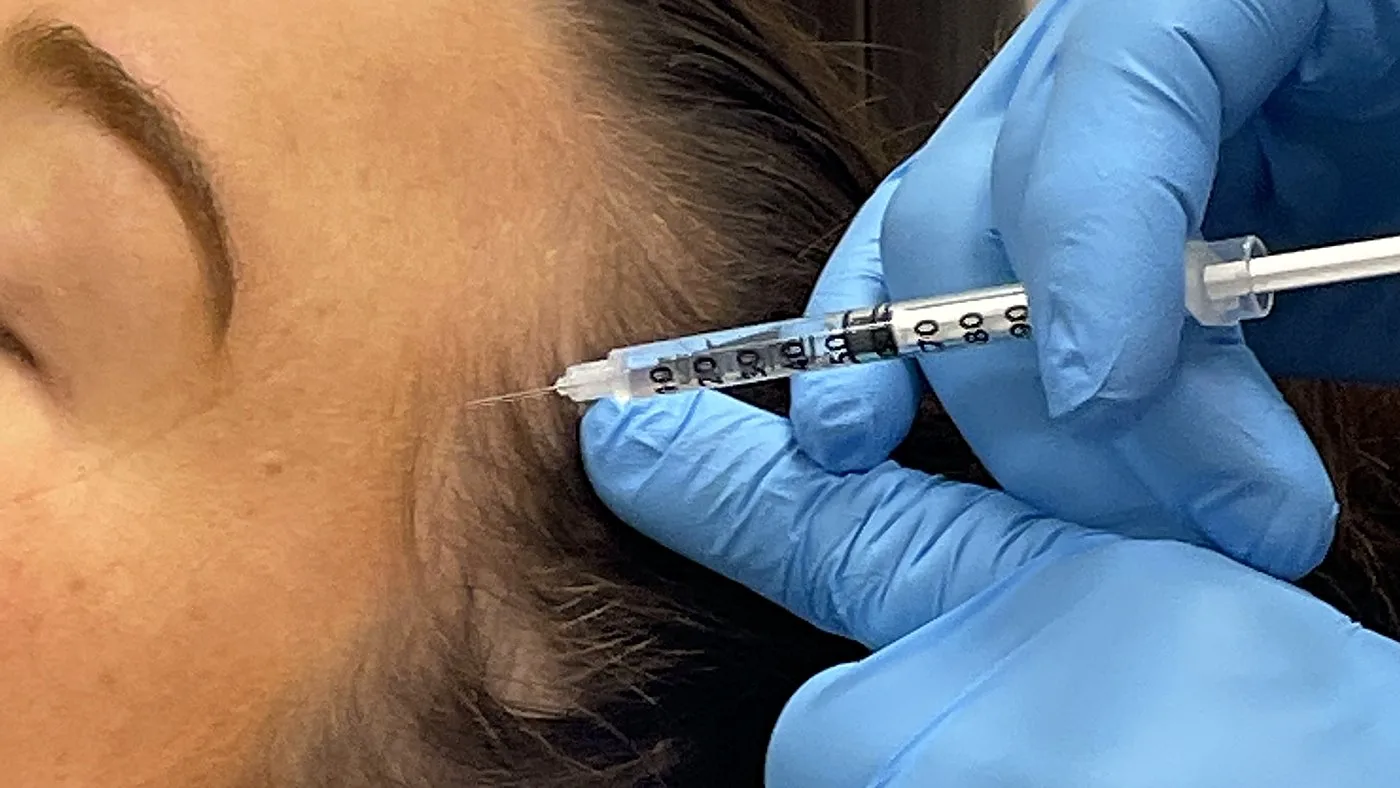
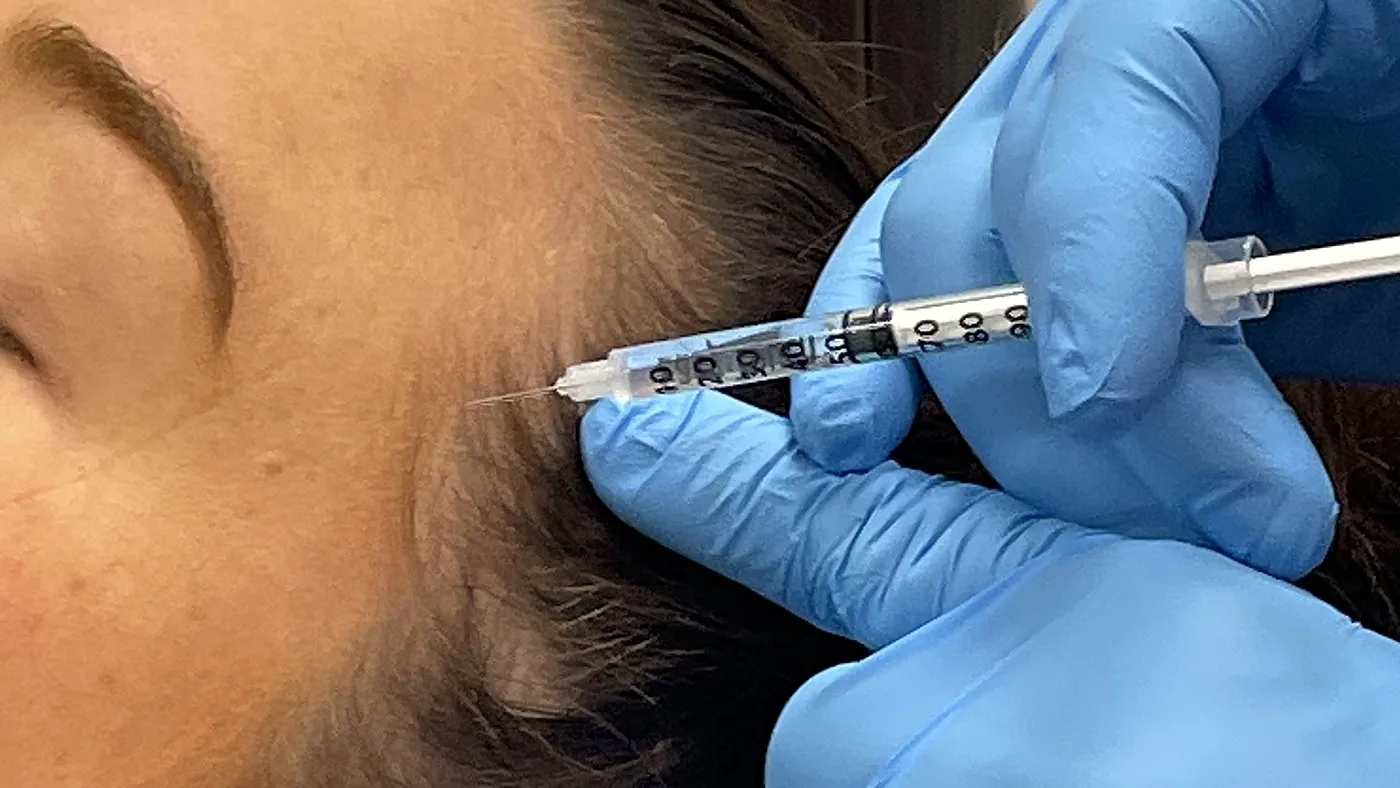
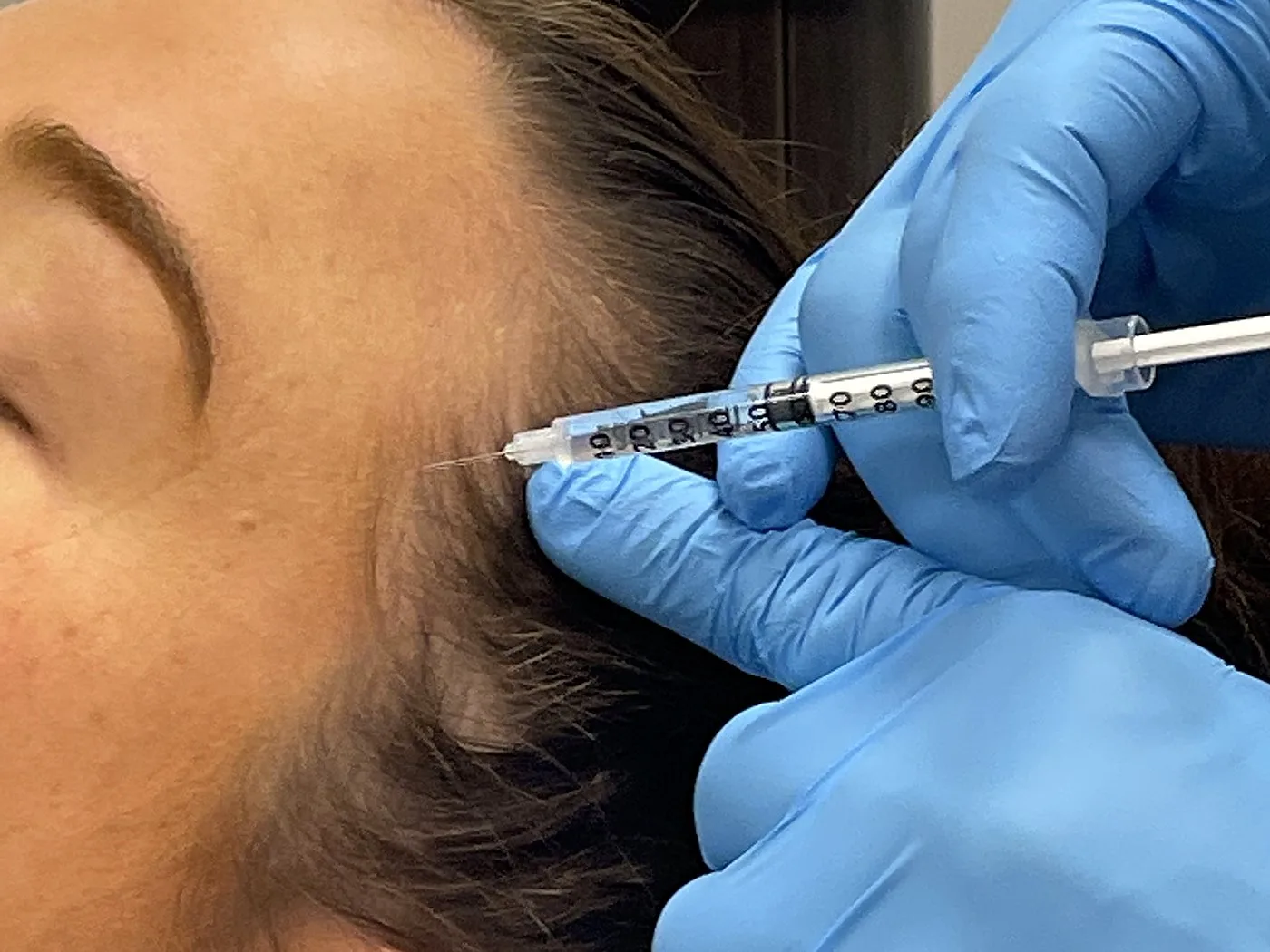
Forehead Botox treatment at Loukas Dentistry Park Ridge IL

Forehead injection — Dr. Loukas, Park Ridge

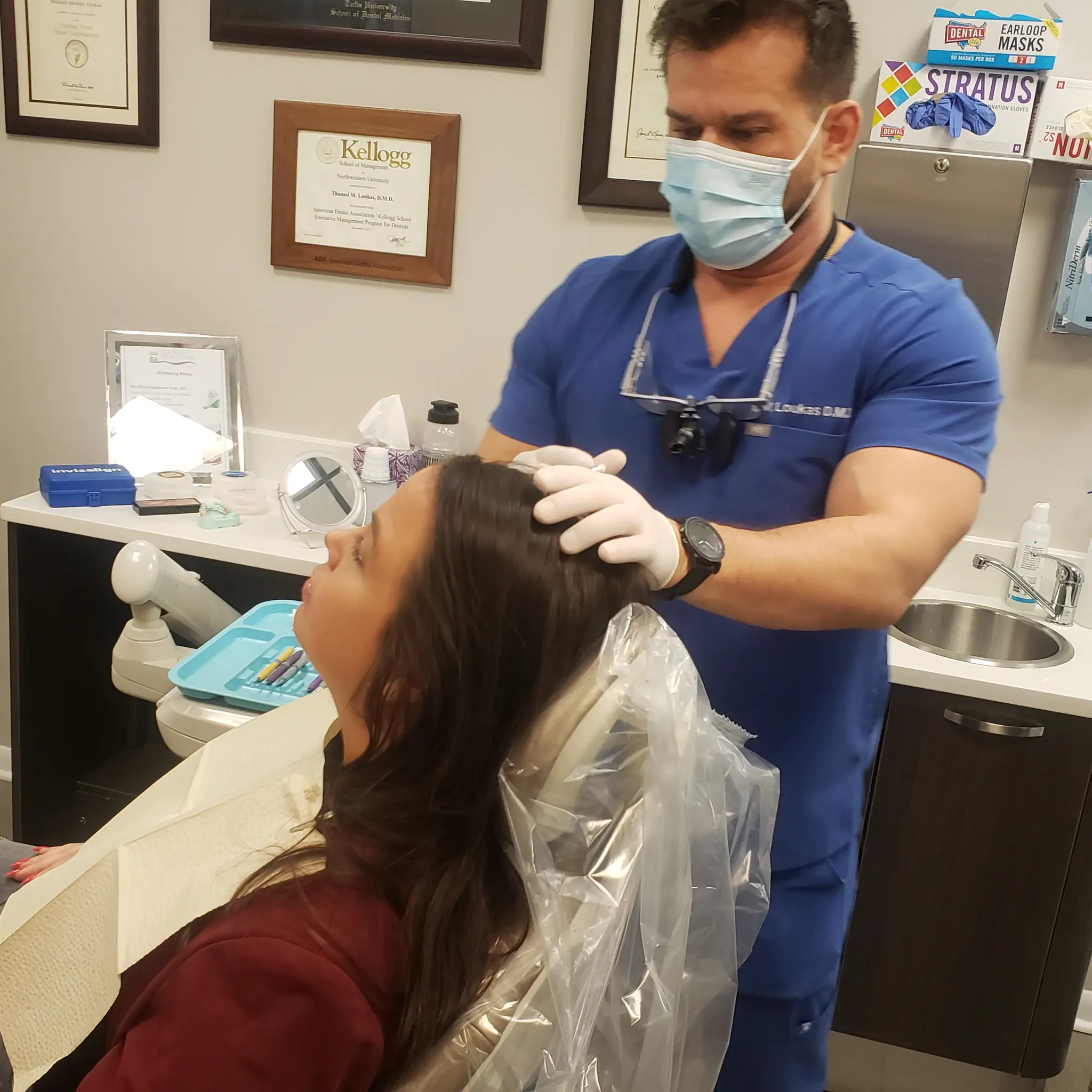
Dr. Thanasi Loukas Botox treatment planning Park Ridge IL

Treatment planning consultation — Dr. Loukas

The Injection Points — Where Botox Is Placed for Migraines

The FDA-approved PREEMPT protocol for chronic migraine treatment involves 31 injections across 7 muscle groups, totaling 155 units of Botox. The injection sites are carefully mapped to address the neuromuscular pathways most involved in migraine initiation and propagation.

PREEMPT Protocol — Injection Areas

31 injection sites across 7 muscle groups

Frontalis
Forehead — horizontal lines, frontotemporal headache
Corrugator / Procerus
Between brows — glabellar tension and frown headache
Temporalis
Temples — temporal pain, jaw clenching headache
Occipitalis
Base of skull — occipital neuralgia, neck-origin headache
Cervical Paraspinals
Back of neck — cervicogenic headache contribution
Trapezius
Upper shoulders — tension referral into the head

Botox migraine injection point map at Loukas Dentistry in Park Ridge IL

Migraine Botox injection point map — Loukas Dentistry of Park Ridge, IL

Why a Dentist? The Unique Advantage of Seeing Dr. Loukas

This is a question worth answering directly, because it reveals a genuine clinical advantage that most patients don’t know about.

Dentists spend more time studying the anatomy of the head, face, jaw, and neck than virtually any other healthcare professional outside of maxillofacial surgeons. Dr. Loukas has advanced training in the temporomandibular joint, the trigeminal nerve system, masticatory muscle anatomy, and neuromuscular jaw function — all of which are directly implicated in migraine and tension headache pathophysiology.

Specifically, there is a well-documented connection between:

  • Bruxism (teeth grinding) and chronic headaches — nighttime clenching activates the temporalis and masseter muscles, creating tension that radiates into the head as morning headaches
  • TMJ disorder and migraine — temporomandibular dysfunction can directly trigger or amplify trigeminal nerve sensitization
  • Jaw position and cervicogenic headache — malocclusion can create compensatory muscle tension up through the neck and into the occiput

When Dr. Loukas evaluates a patient for Botox headache treatment, he is not just mapping injection sites — he is assessing the whole neuromuscular picture, including whether your jaw, bite, or airway may be contributing to your headache burden.

Clinically relevant: Many patients who come in for migraine Botox also have unrecognized bruxism, TMJ tenderness, or airway restriction that is worsening their headache frequency. Treating only the headache without addressing these contributing factors leaves significant relief on the table. Dr. Loukas evaluates for all of them at your consultation.

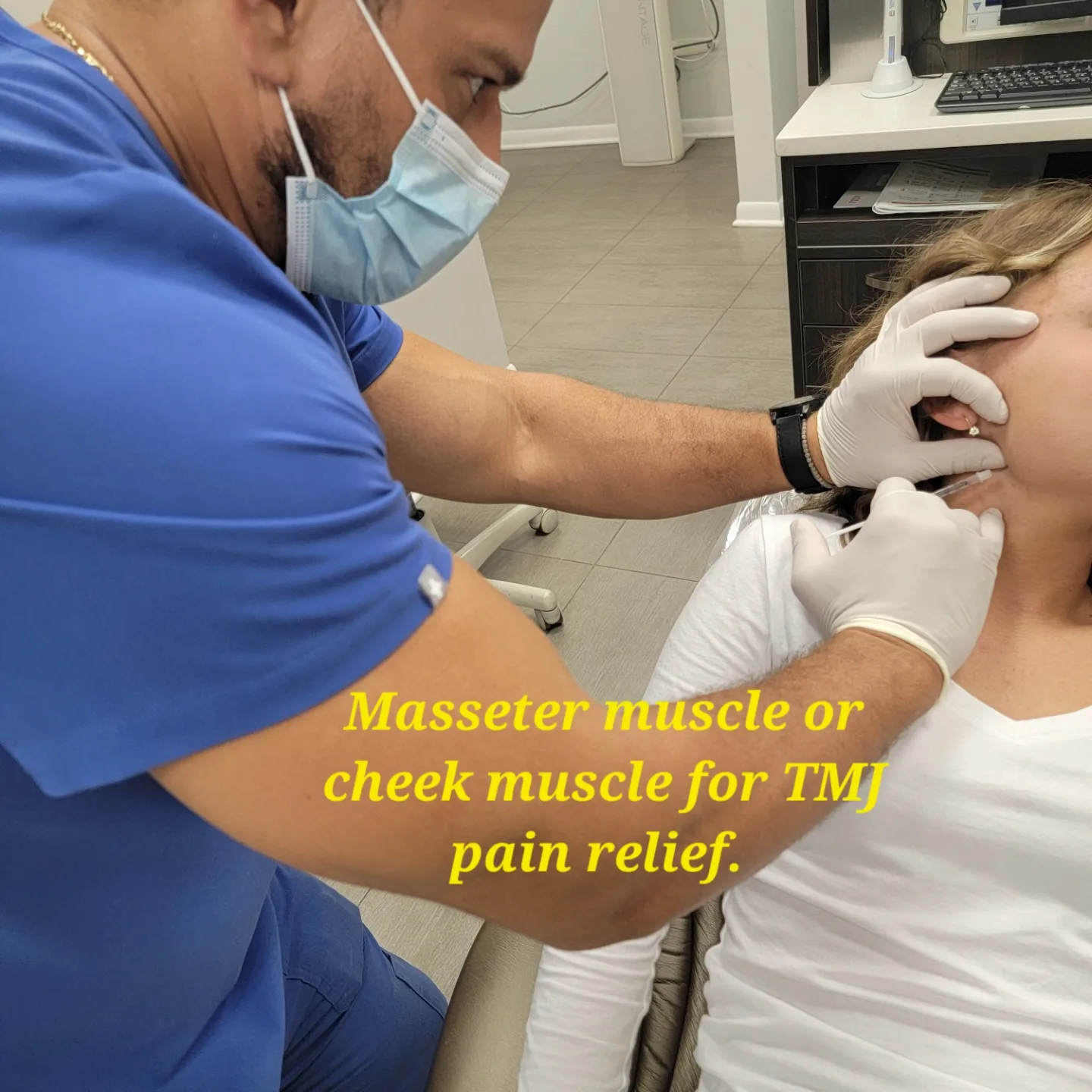
TMJ and masseter Botox treatment planning at Loukas Dentistry Park Ridge IL

Masseter and TMJ Botox treatment planning — Dr. Loukas evaluates jaw muscle involvement in headache patients

Botox for Tension Headaches vs. Migraines — What’s the Difference?

Patients often arrive unsure which type of headache they have. Here’s a clinically useful distinction:

Chronic Migraine

Typically unilateral (one side), pulsating, moderate to severe intensity, worsened by physical activity. Often accompanied by nausea, vomiting, or sensitivity to light and sound. May have aura (visual disturbances, tingling) before onset. FDA-approved Botox indication with strong clinical evidence.

Chronic Tension-Type Headache

Bilateral, pressing or tightening quality (not pulsating), mild to moderate intensity. No nausea or vomiting. Often described as a band or vice around the head. Not an FDA-approved Botox indication, but Botox is used off-label for tension headaches with meaningful results in some patients — particularly those with significant masseter or temporalis muscle involvement.

Cervicogenic Headache

Originating from the neck and referred into the head. Often one-sided, starting at the base of the skull. Worsened by neck movement. Botox injected into cervical paraspinals and trapezius can significantly reduce cervicogenic headache frequency.

What to Expect — The Treatment Process

  1. Consultation: Dr. Loukas reviews your headache history, frequency, triggers, and prior treatments. He also assesses your jaw, bite, and muscle tenderness to identify any neuromuscular contributions.
  2. Treatment planning: The injection map is customized to your headache pattern. Standard PREEMPT protocol is the baseline; modifications are made based on where your pain is concentrated.
  3. Injections: 31 injections across the forehead, temples, base of skull, neck, and upper shoulders. Each injection takes under a second. Most patients describe the sensation as a very brief pinch. Total treatment time is approximately 20–25 minutes.
  4. Recovery: No downtime. You can return to normal activities immediately. Mild tenderness at injection sites may last 24–48 hours. Avoid rubbing the treated areas and strenuous exercise for the rest of the day.
  5. Results timeline: Most patients notice a gradual reduction in headache frequency beginning 2–4 weeks after treatment. The full benefit typically becomes apparent after the second or third treatment cycle.
  6. Maintenance: Botox for migraine is repeated every 3 months. Efficacy tends to improve with successive treatments as the muscles become progressively retrained.
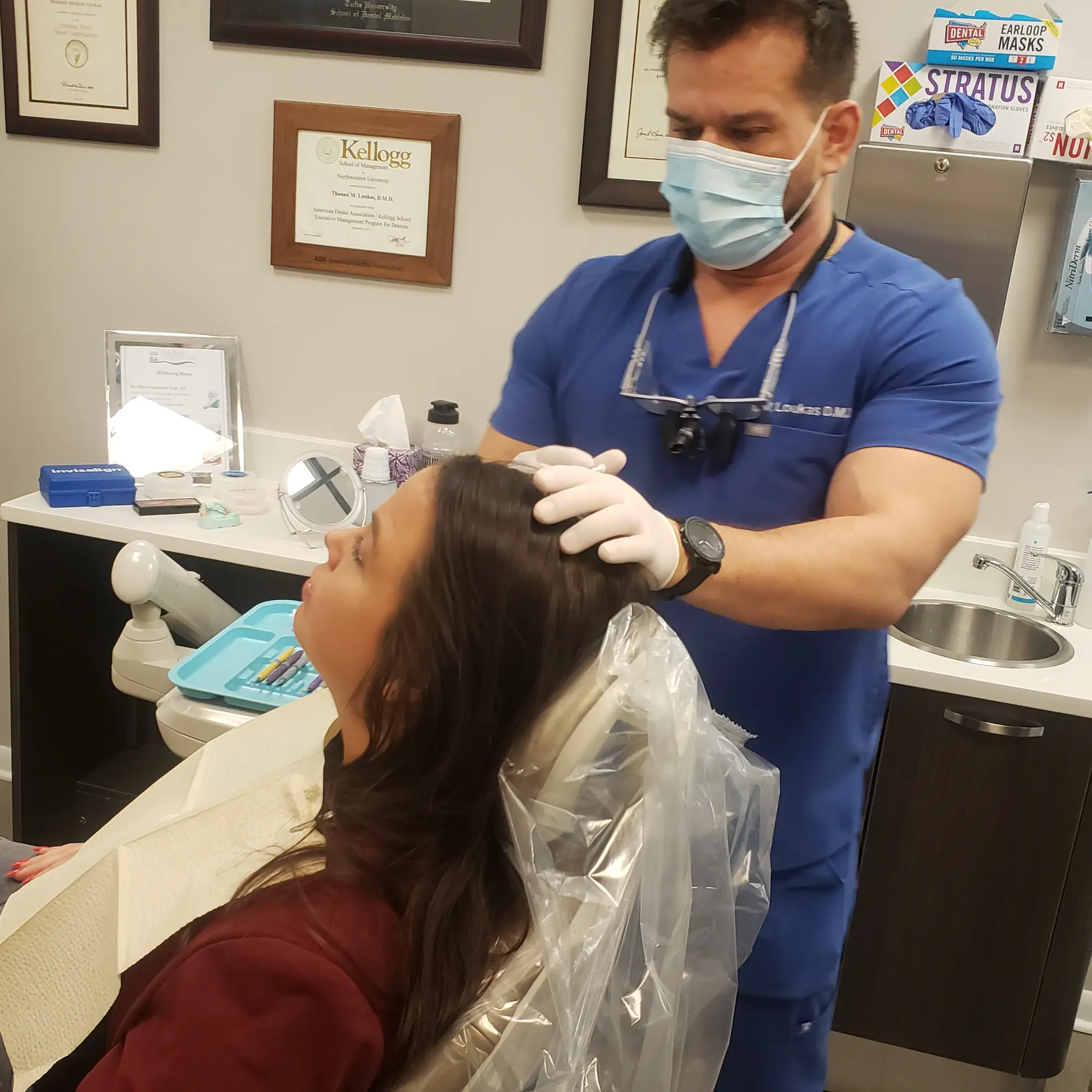
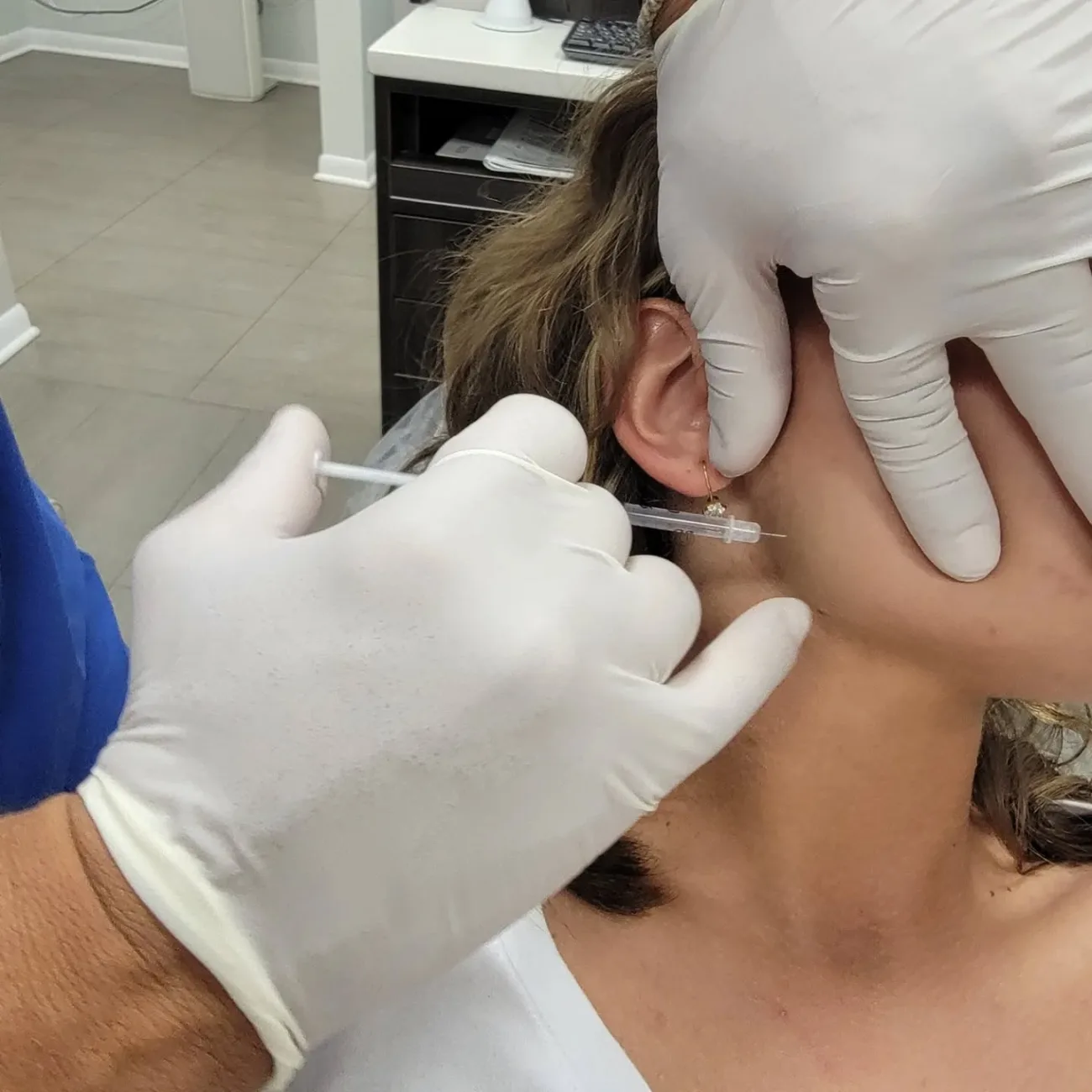
Dr. Loukas performing Botox treatment at Loukas Dentistry Park Ridge

Dr. Loukas performing Botox treatment — Park Ridge, IL

Clinical Botox treatment at Loukas Dentistry in Park Ridge IL

Clinical Botox session — Loukas Dentistry, Park Ridge

Does Insurance Cover Botox for Migraines?

Botox for chronic migraine (not cosmetic Botox) is covered by most major medical insurance plans when properly documented. Coverage typically requires:

  • A diagnosis of chronic migraine (15+ headache days/month)
  • Documentation of prior preventive medication trials that were ineffective or poorly tolerated
  • Submission through medical insurance (not dental insurance)

Our team can assist you in documenting your case for insurance submission. Call (847) 696-1919 to discuss your specific plan and coverage before scheduling.

Ready to Stop Counting Headache Days?

Schedule a Botox migraine consultation with Dr. Thanasi Loukas at Loukas Dentistry of Park Ridge. We’ll review your headache history, assess contributing jaw and muscle factors, and design a treatment plan personalized to your pattern.

Schedule Your Consultation
  
Call (847) 696-1919

Frequently Asked Questions

How many Botox units are needed for migraine treatment?

The FDA-approved PREEMPT protocol uses 155 units of Botox administered across 31 injection sites. This is significantly more than cosmetic Botox, which typically uses 20–50 units. The quantity and placement are specifically designed for headache prevention, not wrinkle reduction.

Will migraine Botox make my face look different?

The injection sites for migraine treatment partially overlap with cosmetic sites (forehead, glabella, temples), so some cosmetic benefit is possible. However, the primary goal is therapeutic — and the dosing is calibrated for muscle relaxation, not cosmetic smoothing. Most migraine patients notice subtle cosmetic improvement as a secondary benefit.

How quickly will I see results?

Botox begins working within 5–14 days of injection. For migraine prevention, the full therapeutic effect develops over 4–6 weeks and typically improves further with each successive treatment cycle. Clinical trials show that by the third cycle, many patients achieve 50% or greater reduction in monthly migraine days.

Can Botox completely eliminate my migraines?

For some patients, yes. Clinical data from the PREEMPT trials showed that approximately 27% of patients who received Botox for chronic migraine were completely headache-free at 24 weeks. Most patients experience meaningful reduction rather than complete elimination. Results vary based on migraine type, contributing factors, and individual response.

What if I also grind my teeth?

This is actually an important conversation to have. Bruxism and migraine are frequently co-occurring, and the masseter and temporalis muscles involved in grinding are also among the key injection sites for migraine treatment. Dr. Loukas can address both simultaneously — the same treatment session can reduce grinding-related jaw tension and headache frequency together.

About the Author: Dr. Thanasi M. Loukas, DMD is a 2006 graduate of Tufts University School of Dental Medicine and owner of Loukas Dentistry of Park Ridge, IL. He is a certified Botox and dermal filler provider with extensive training in facial anatomy, TMJ treatment, and neuromuscular dentistry. He serves patients from Park Ridge, Niles, Des Plaines, Norwood Park, Edison Park, and the Northwest Chicago suburbs. Read Dr. Loukas’s full bio →

Implant Supported Denture Before and After: A Life Changing Transformation in Park Ridge

Implant-Supported Denture Transformation at Loukas Dentistry

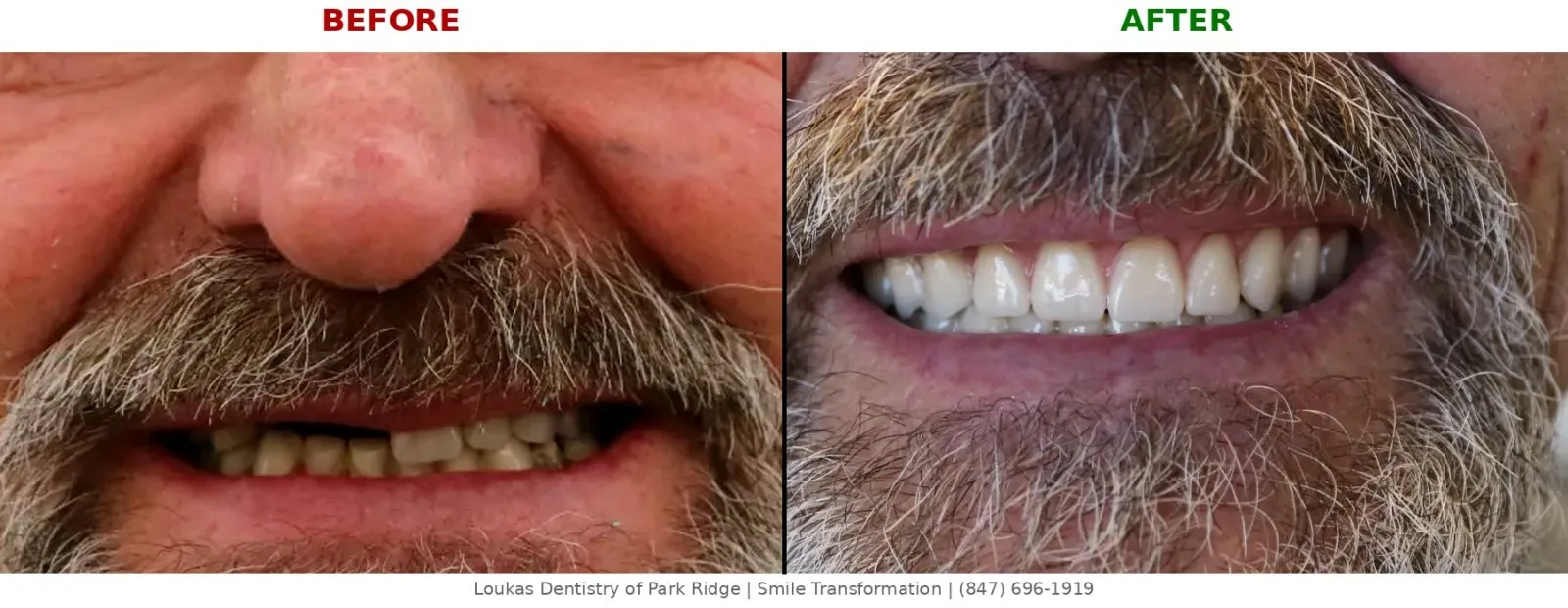
This patient came to Loukas Dentistry of Park Ridge struggling with damaged, failing teeth that made it difficult to eat, speak, and smile with confidence. After a comprehensive evaluation, Dr. Thanasi Loukas recommended implant-supported dentures with locator attachments as the ideal solution.

Smile Transformation: Full View

Pixel-perfect full face before and after implant-supported denture transformation at Loukas Dentistry Park Ridge IL
Pixel-perfect smile transformation with exact horizontal alignment of the teeth and lip line.

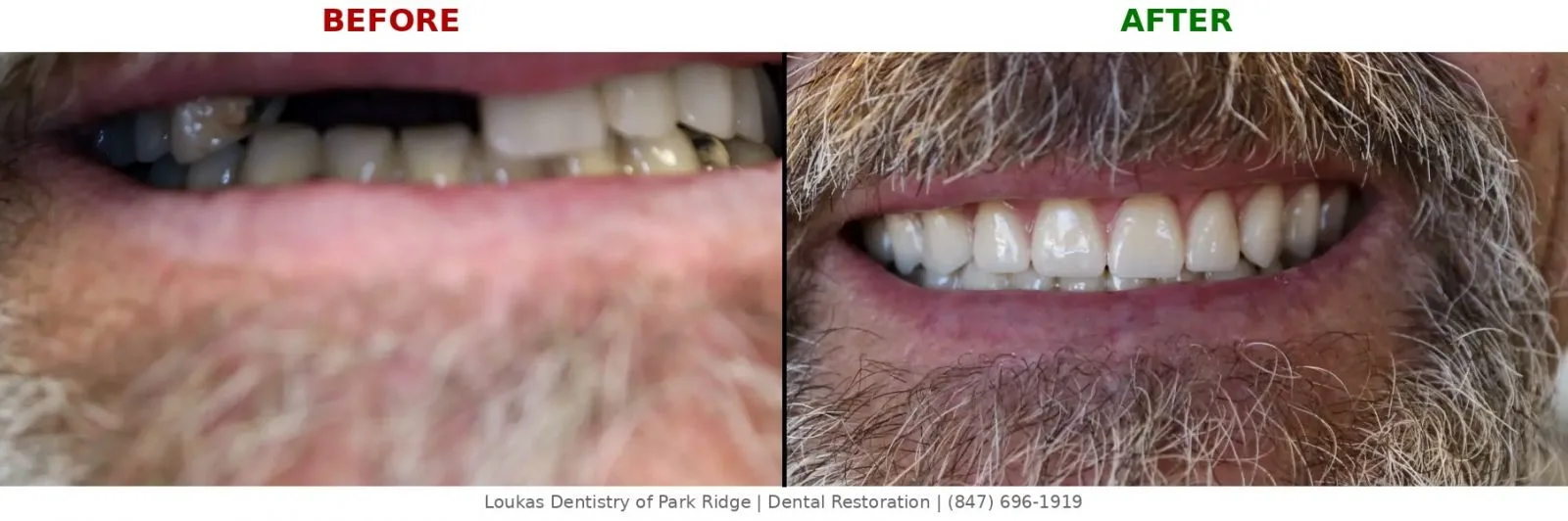
Dental Restoration: Close-Up View

Pixel-perfect close-up before and after dental implant-supported denture showing tooth restoration at Loukas Dentistry Park Ridge
Close-up view with perfectly aligned horizontal plane for an accurate clinical comparison.

About This Case

This patient presented with severely worn, discolored, and failing teeth. Traditional dentures were considered but the patient wanted a secure solution that would not slip or require adhesives. Dr. Loukas placed dental implants in the jaw and attached a custom denture using precision locator attachments, allowing the denture to snap securely into place.

Fixed Locator Attachments: A Cost-Effective Alternative to All-on-4

At Loukas Dentistry, we also offer fixed (permanent) locator attachment dentures that do not come out. This provides the same security and confidence as All-on-4 treatment but at a more accessible price point. Fixed locator dentures are an excellent option for patients who want a permanently attached solution without the higher cost of a full-arch fixed bridge.

Schedule Your Implant Consultation

If you are struggling with loose dentures, failing teeth, or want to learn about implant-supported denture options, schedule a consultation with Dr. Thanasi Loukas at Loukas Dentistry of Park Ridge. Call (847) 696-1919 or visit us at 714 W Higgins Rd, Park Ridge, IL 60068.

Learn more about Implant-Supported Dentures | Dental Implants | Watch Our Implant Denture Video

What Is a Screw Retained Implant Crown? A Real Procedure Video

If you have ever wondered what actually happens when a dentist delivers a dental implant crown, this post gives you a rare, behind-the-scenes look. Dr. Thanasi Loukas captured this real clinical procedure on video, showing the precise, step-by-step process of delivering a screw retained implant crown to a patient at Loukas Dentistry of Park Ridge.

Watch the Procedure: Screw Retained Implant Crown Delivery

Dr. Thanasi Loukas delivering a screw retained implant crown at Loukas Dentistry of Park Ridge, IL.

View the full watch page with transcript and procedure details →

What Is a Screw Retained Implant Crown?

A dental implant crown is the visible, tooth-shaped cap that sits on top of a dental implant. There are two ways to attach this crown to the implant: with dental cement, or with a small screw. A screw retained crown is held in place by a tiny titanium screw that passes through the crown and threads directly into the implant post.

At Loukas Dentistry, Dr. Loukas strongly prefers the screw retained design for most cases, and here is why.

Screw Retained vs. Cement Retained: Why It Matters

The choice between screw retained and cement retained implant crowns is one of the most important decisions in implant dentistry, and it is one that many patients never hear about. The difference has significant long-term consequences for your oral health.

With cement retained crowns, excess dental cement can seep below the gum line during placement. This residual cement is extremely difficult to detect and remove, and it can trigger a condition called peri-implantitis, which is inflammation and bone loss around the implant. Studies have shown that excess cement is a leading cause of implant failure.

A screw retained crown eliminates this risk entirely. There is no cement involved. The crown is secured with a single screw, and if the crown ever needs to be removed for cleaning, adjustment, or repair, Dr. Loukas can simply unscrew it, make the necessary changes, and replace it without damaging the implant or the surrounding tissue.

The Delivery Process: What You See in the Video

In the video above, you can see Dr. Loukas carefully seating the custom porcelain crown onto the implant abutment. He checks the fit from multiple angles, verifies the bite with articulating paper, and then torques the retaining screw to the precise specification recommended by the implant manufacturer. The small access hole in the top of the crown is then sealed with a tooth-colored composite resin, leaving a virtually invisible, natural-looking result.

The entire delivery appointment typically takes less than an hour, and patients leave with a permanent, fully functional tooth that looks and feels completely natural.

Is a Screw Retained Crown Right for You?

Most patients who are candidates for a single tooth dental implant are also candidates for a screw retained crown. The key factors Dr. Loukas evaluates include the position of the implant, the available space, and the aesthetic demands of the case. For front teeth and high-visibility areas, the screw access hole is positioned on the back of the crown where it is completely invisible when you smile.

If you are considering dental implants in Park Ridge, IL, we encourage you to schedule a consultation with Dr. Loukas to discuss which implant crown design is best for your specific situation.

Ready to Replace a Missing Tooth?

Dr. Loukas offers complimentary implant consultations. Call or book online today.

Learn About Implants
Call (847) 696-1919

Same Day Emergency Tooth Replacement: A Real Patient Case

Real Patient Case: Comprehensive Dental Trauma Recovery

When a severe dental emergency strikes, it requires more than just a quick fix. It requires a multidisciplinary approach to save the natural teeth, restore function, and rebuild the smile. At Loukas Dentistry of Park Ridge, we handle complex trauma cases that require expertise across emergency dentistry, oral surgery, endodontics, and restorative care.

This case study highlights our approach to severe dental trauma following a slip-and-fall accident, demonstrating how we manage avulsions, intrusions, and complex restorations to achieve a complete recovery, all performed on the same day on an emergency basis.

The Emergency Situation: Same-Day Trauma Care for a Traveling Patient

This patient was a new patient who was traveling through the area when the accident occurred. After a severe slip-and-fall, the patient needed immediate emergency dental care and contacted Loukas Dentistry. Despite being a first-time visitor to our office, we were able to see the patient the same day, perform a comprehensive emergency evaluation, and complete the critical stabilization and treatment all in a single emergency visit.

The trauma to the face and mouth was severe, causing immediate pain, swelling, and functional impairment. Upon emergency evaluation, Dr. Thanasi Loukas identified several critical clinical findings:

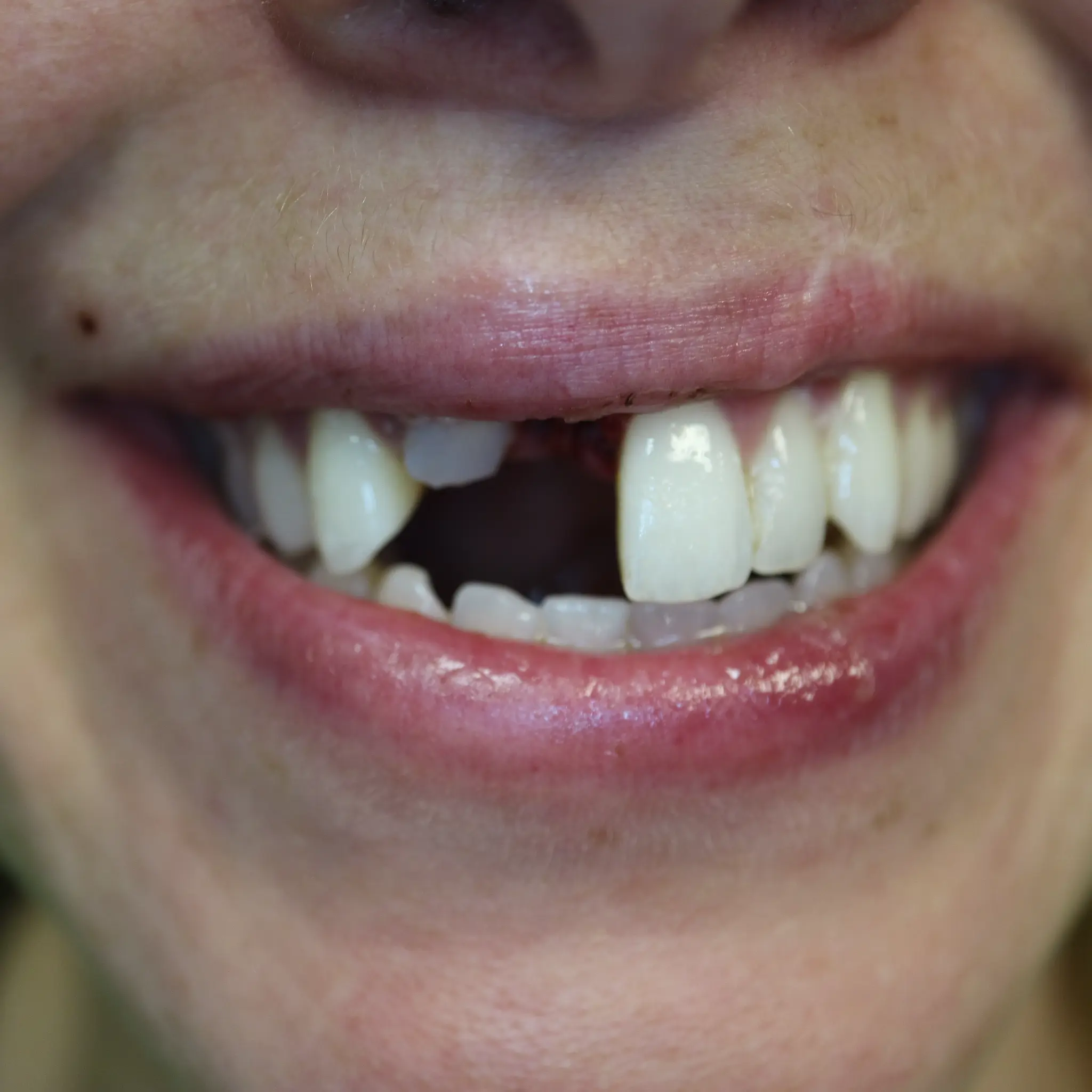
  • Avulsed Maxillary Central Incisor (#8): The front tooth had been completely knocked out of its socket.
  • Severe Intrusion of Maxillary Lateral Incisor (#7): The adjacent tooth had been jammed upward deep into the jawbone.
  • Fractured Tooth Structure: Significant damage to the enamel and dentin of the affected teeth.
  • Traumatic Displacement: General misalignment of the anterior teeth due to the impact.
  • Soft Tissue Injury: Lacerations and trauma to the surrounding gums and lips.

Before Treatment: Documenting the Trauma

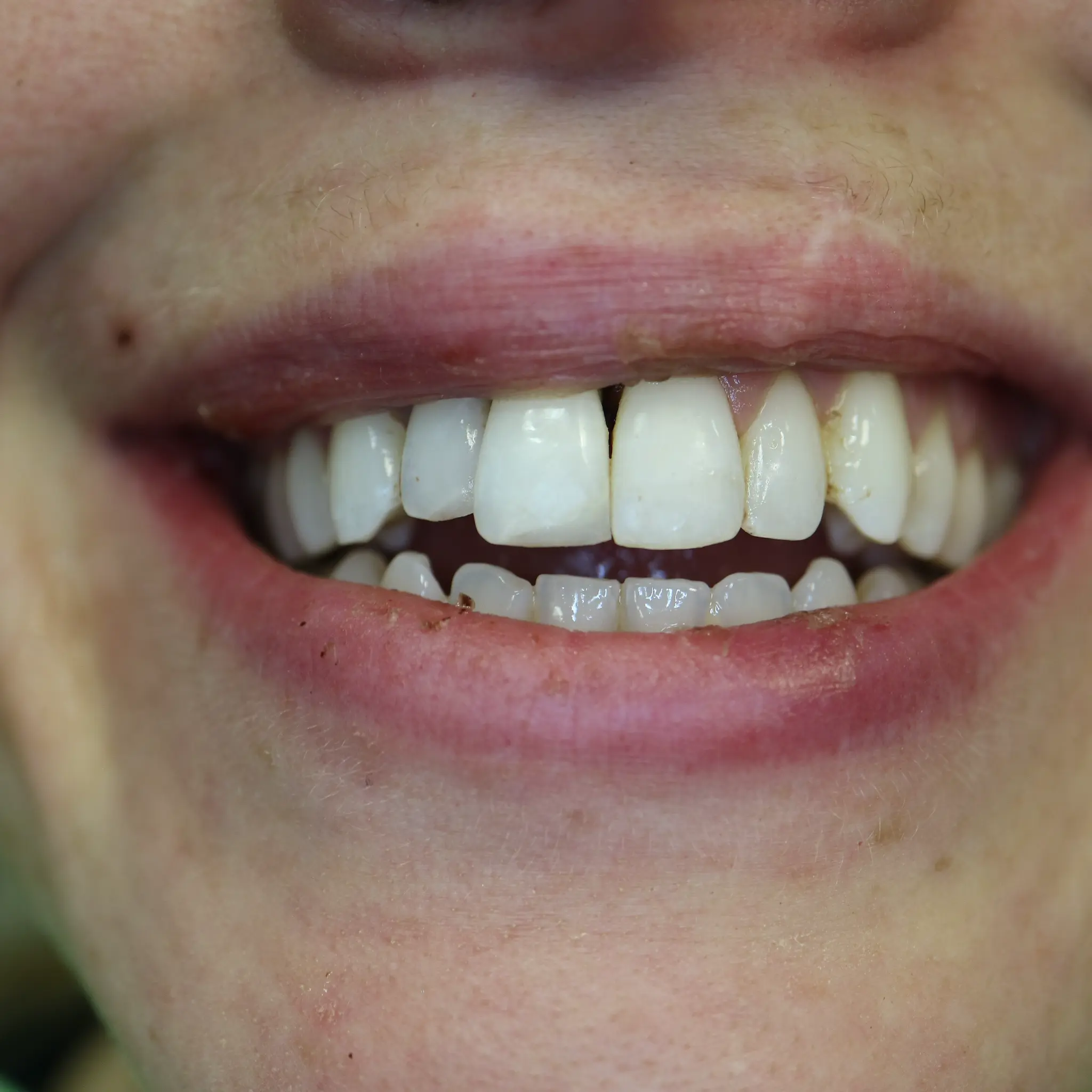
Dental trauma before treatment showing avulsed front tooth at Loukas Dentistry Park Ridge IL
Front view: Avulsed central incisor #8, displaced teeth
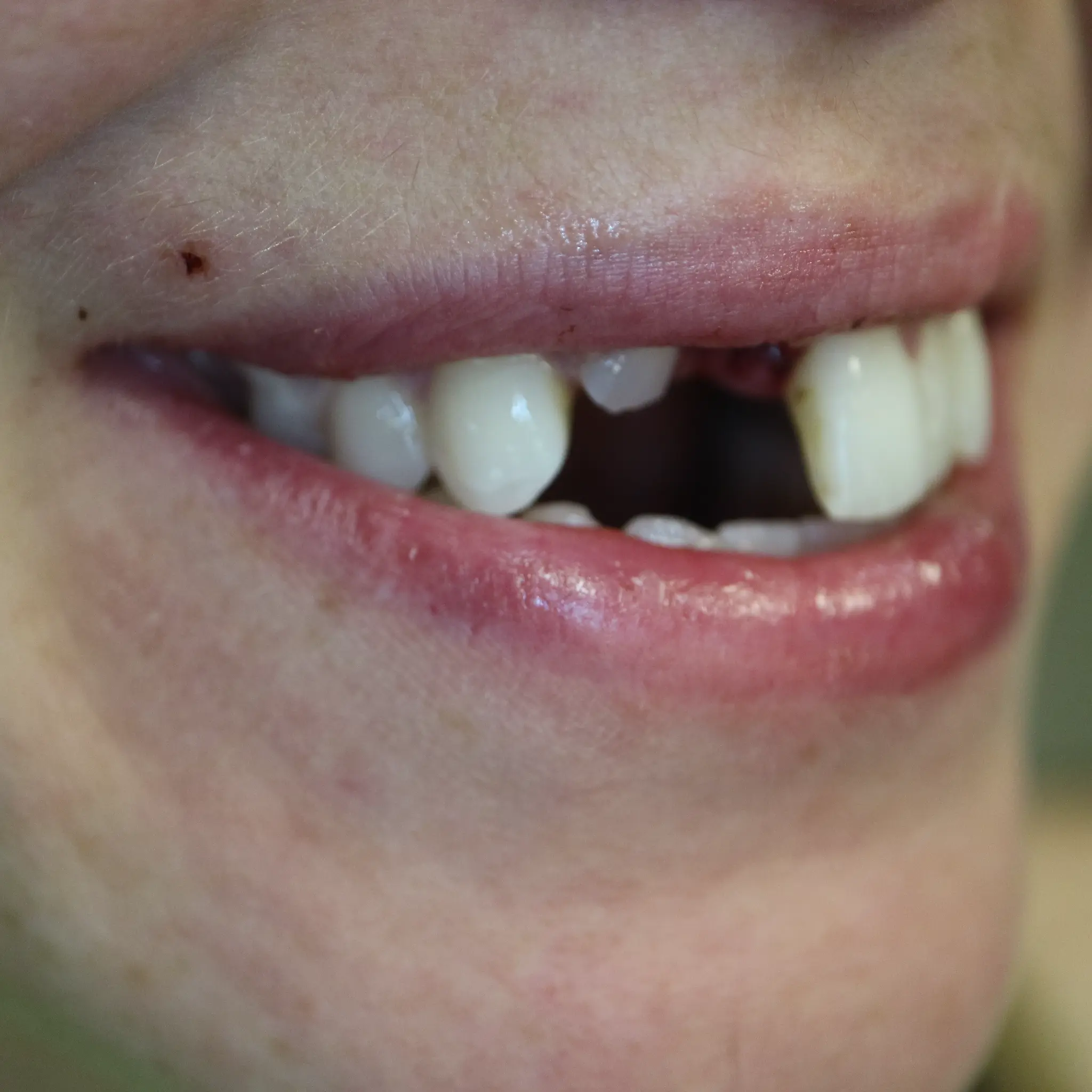
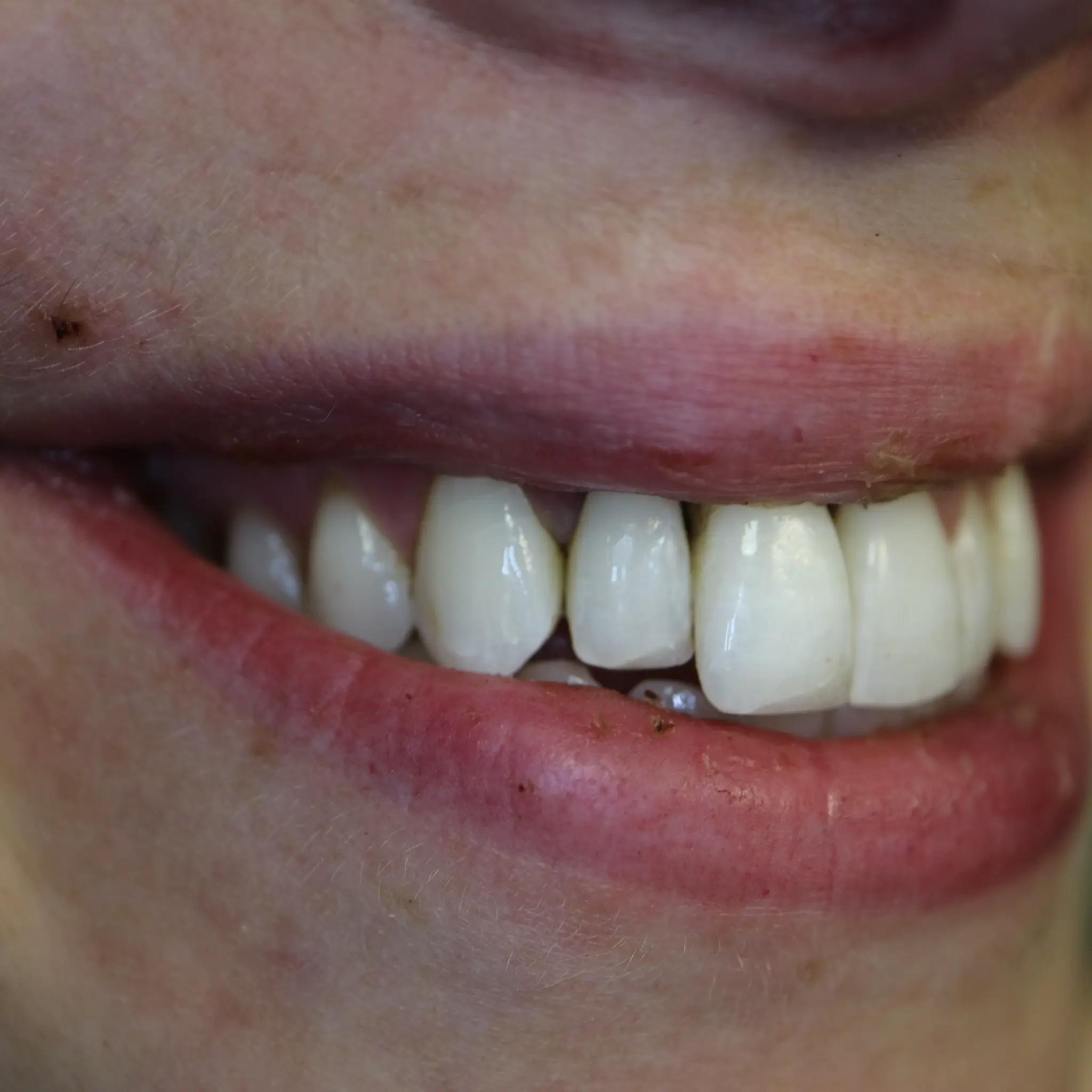
Side view of knocked out front tooth before emergency treatment at Loukas Dentistry Park Ridge
Side view: Missing central incisor, lateral displacement
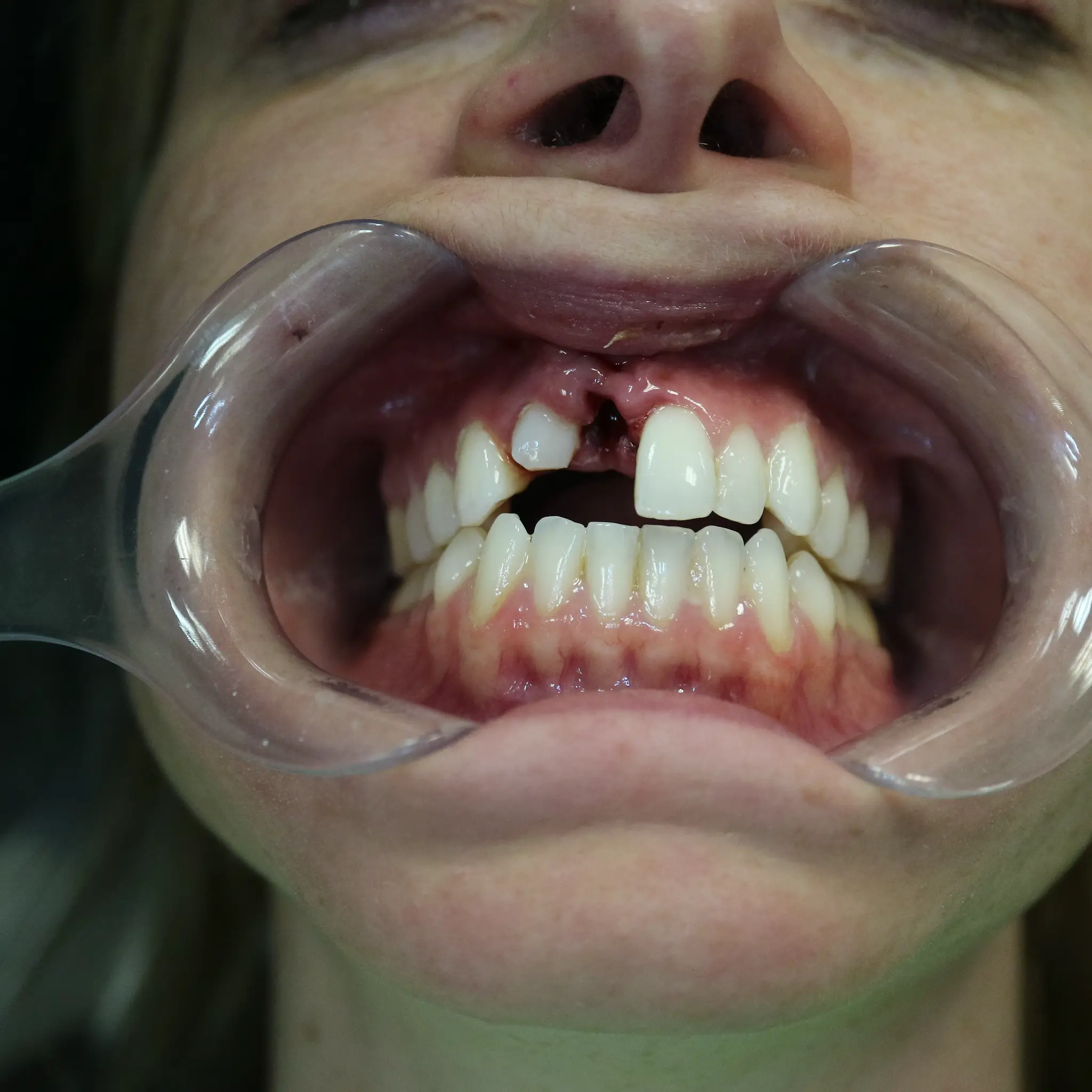
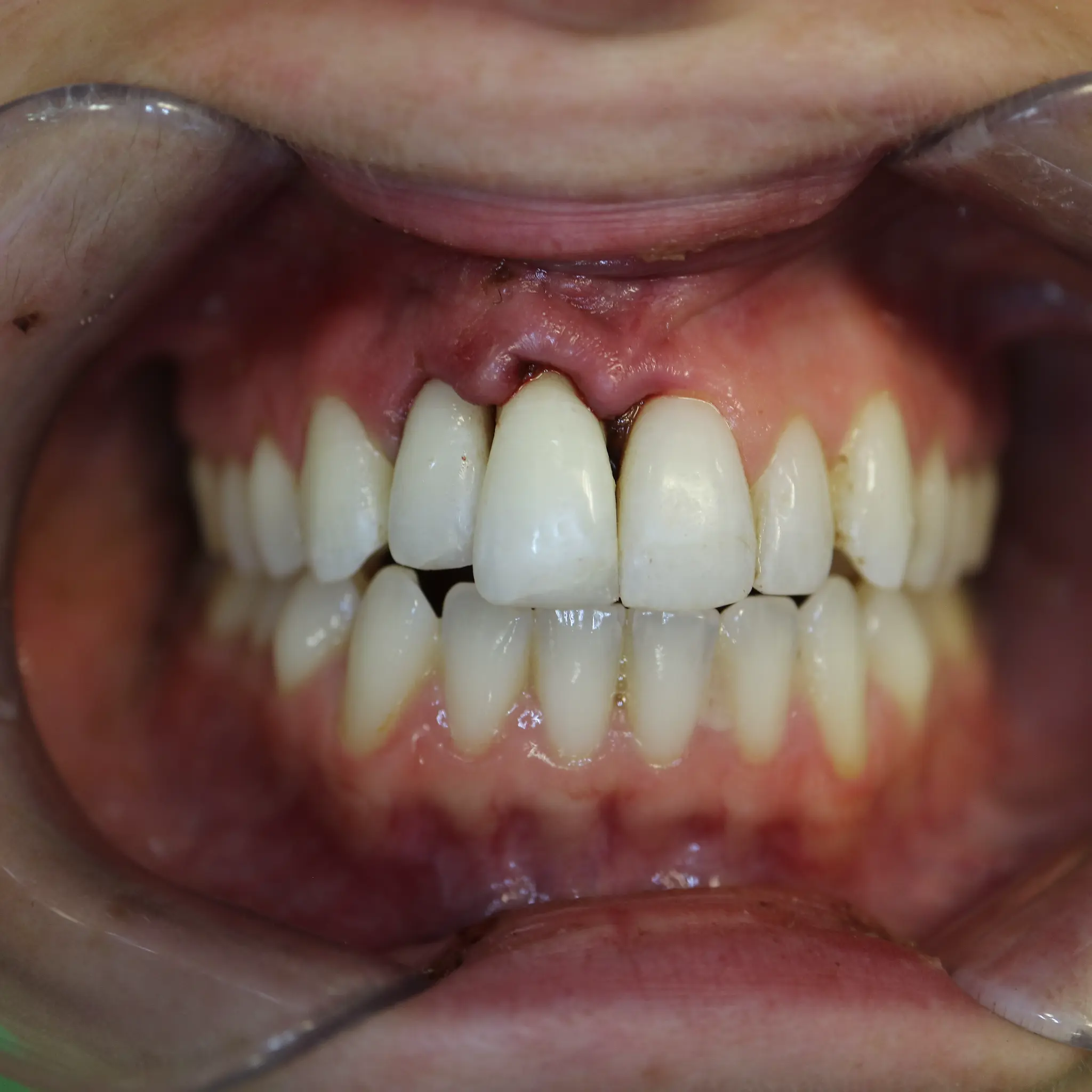
Clinical retracted view showing avulsed tooth socket and intruded lateral incisor at Loukas Dentistry Park Ridge
Retracted view: Empty socket, intruded lateral incisor #7
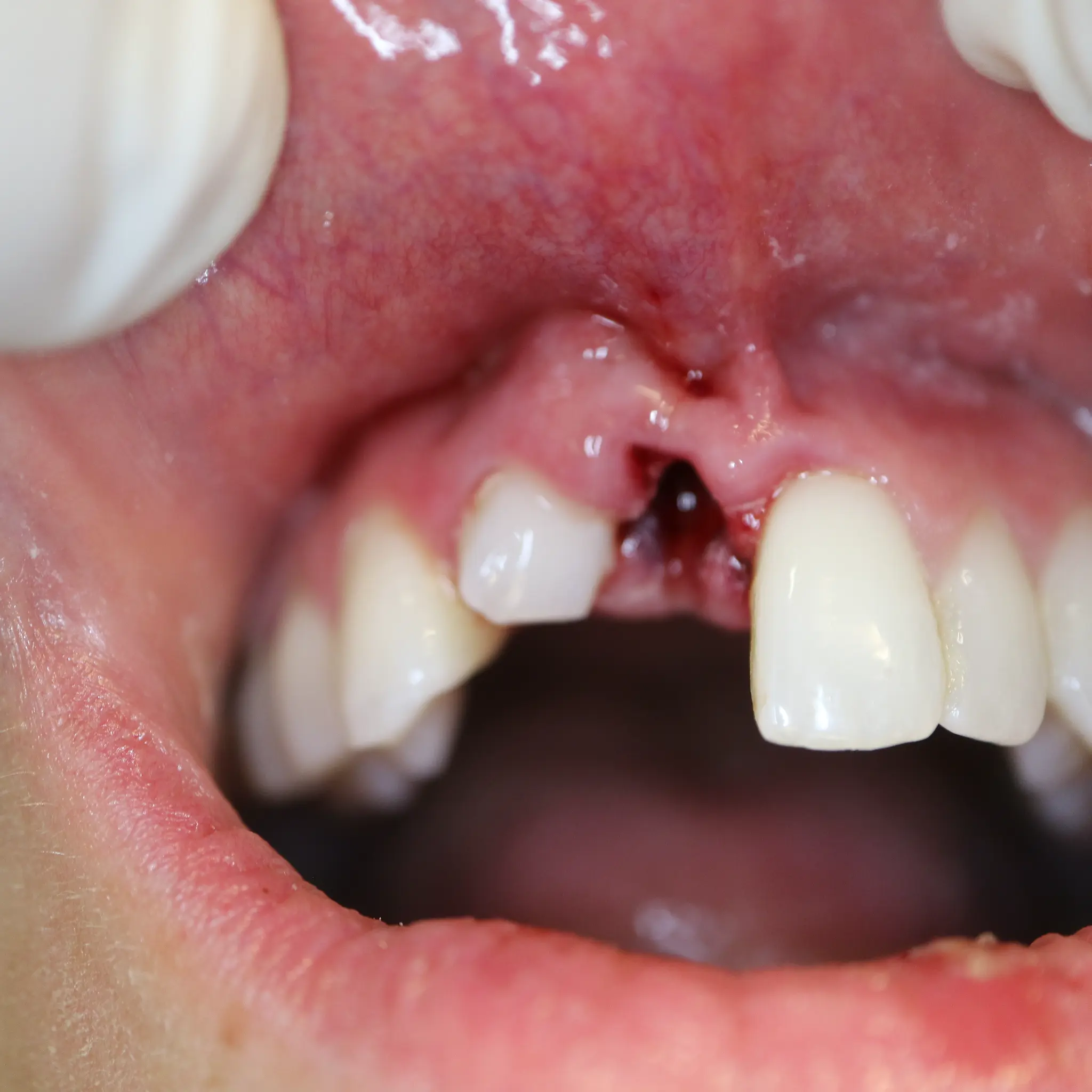
Close-up of avulsed tooth socket showing bleeding and displaced lateral incisor at Loukas Dentistry Park Ridge
Close-up: Avulsion site with active bleeding

Our Multidisciplinary Treatment Approach: Completed Same Day

Managing a case of this complexity requires immediate action combined with a long-term strategic plan. Because time is critical in dental trauma, and because this patient was traveling and needed resolution before continuing their trip, Dr. Loukas performed the emergency surgical treatment, stabilization, and initial restoration all in a single same-day visit. The treatment involved several coordinated phases:

1. Immediate Trauma Stabilization

The first priority was to stabilize the injury and manage the patient’s pain. We carefully cleaned the avulsed tooth (#8) and the socket, preparing it for immediate reimplantation. Simultaneously, we addressed the soft tissue injuries to prevent infection and promote healing.

2. Surgical Repositioning and Splinting

The severely intruded lateral incisor (#7) required careful surgical repositioning to bring it back into its proper alignment within the dental arch. Once both teeth (#7 and #8) were correctly positioned, we placed a fixed splint across the anterior teeth. This stabilization is crucial, as it holds the traumatized teeth securely in place, allowing the periodontal ligaments and surrounding bone to heal and reattach.

3. Endodontic Therapy (Root Canal)

When a tooth is completely avulsed, its blood supply is severed, leading to the necrosis of the dental pulp. To save tooth #8 and prevent severe infection or root resorption, we performed prompt root canal therapy. This step is vital for the long-term retention of a reimplanted tooth.

4. Ongoing Restorative Rehabilitation

After the initial healing period and the removal of the splint, we began the restorative phase. This involved repairing the fractured tooth structures and ensuring the bite was correctly aligned. We utilized advanced composite bonding and custom restorations to rebuild the natural shape, color, and strength of the damaged teeth.

5. Long-Term Monitoring

Dental trauma requires vigilant follow-up. We scheduled regular appointments to monitor the healing process, check the vitality of the surrounding teeth, and ensure the long-term success of the reimplantation and restorations.

After Treatment: Complete Recovery

After emergency treatment showing splinted teeth and restored smile at Loukas Dentistry Park Ridge IL
Front view: Teeth repositioned and splinted
Side view of restored smile after dental trauma treatment at Loukas Dentistry Park Ridge IL
Side view: Natural alignment restored
Final clinical result showing complete dental trauma restoration with retractors at Loukas Dentistry Park Ridge IL
Clinical view: Final restoration complete

Actual patient of Loukas Dentistry. Progression from severe dental trauma to complete functional and aesthetic restoration.

Comprehensive Emergency Care at Loukas Dentistry

This case exemplifies why Loukas Dentistry is equipped to handle more than just routine checkups. Whether you are an existing patient or a new patient in need, whether you live locally or are traveling through the area, we accept emergency patients on a same-day basis and provide comprehensive treatment under one roof. We manage a wide array of complex dental emergencies in-office, including:

  • Knocked-out (avulsed) teeth
  • Intruded or displaced teeth
  • Broken, chipped, or cracked teeth
  • Severe dental infections and abscesses
  • Facial swelling and severe tooth pain
  • Lost crowns or fillings
  • Sports and trauma-related injuries

Because we offer comprehensive services, from extractions and root canals to surgical splinting, bone grafting, and advanced restorations, we can often perform necessary emergency treatments right here in our Park Ridge office. In the rare event that highly specialized care is required, we coordinate seamlessly with trusted local specialists to ensure you receive the best possible treatment.

Experiencing a Dental Emergency?

Time is critical in trauma cases. Dr. Loukas and our experienced team are equipped to handle severe dental injuries.

Call (847) 696-1919 Now

Frequently Asked Questions

What should I do if my tooth is knocked out?

Find the tooth immediately, hold it only by the crown (never the root), gently rinse it with milk or saline, and try to place it back in the socket. If you cannot reinsert it, store it in milk or your own saliva and call us immediately. Time is critical: the sooner you arrive, the higher the chance of saving the tooth.

Can an intruded tooth be saved?

In many cases, yes. An intruded tooth that has been pushed into the jawbone can often be surgically repositioned and splinted. The success depends on the severity of the intrusion, the patient’s age, and how quickly treatment is initiated. Dr. Loukas will evaluate the injury and determine the best course of action.

Why is a root canal needed after a tooth is knocked out and reimplanted?

When a tooth is completely avulsed, the blood supply to the nerve (pulp) inside the tooth is severed. Without blood flow, the pulp tissue dies. Root canal therapy removes the dead tissue and seals the canal, preventing infection and root resorption. This is essential for the long-term survival of the reimplanted tooth.

How long does the splint stay on after dental trauma?

Typically, a flexible splint remains in place for 2 to 4 weeks for most traumatic injuries. For intrusion injuries or root fractures, the splint may need to remain longer. Dr. Loukas will monitor healing at regular follow-up appointments and remove the splint when the teeth have stabilized.

Does Loukas Dentistry handle all types of dental emergencies?

Yes. We treat knocked-out teeth, intruded teeth, broken and cracked teeth, dental infections, abscesses, facial swelling, severe tooth pain, lost crowns and fillings, and trauma-related injuries. Many emergency treatments, including extractions, root canals, bonding, splinting, grafting, and stabilization procedures, can be performed in our Park Ridge office.

How Much Do Dental Implants Cost in Park Ridge, IL?

Understanding Dental Implant Costs in Park Ridge

Dental implants are one of the most effective and long-lasting solutions for replacing missing teeth. If you have been researching implants in the Park Ridge, IL area, you have probably noticed that costs can vary widely. At Loukas Dentistry, we believe in transparent pricing and helping patients understand exactly what they are paying for. This guide breaks down the factors that affect the cost of dental implants and explains the financing options available at our Park Ridge office.

What Is the Average Cost of a Dental Implant?

A single dental implant in the Park Ridge area typically costs between $3,000 and $5,000 for the complete procedure, which includes the implant post, the abutment, and the crown. This range reflects differences in bone density, the need for preparatory procedures, and the complexity of each case.

It is important to understand that dental implants are a long-term investment. With proper care, implants can last 20 to 30 years or even a lifetime, making them more cost-effective than bridges or dentures that need to be replaced every 5 to 15 years.

What Factors Affect the Cost?

Several factors influence the total cost of your dental implant treatment at Loukas Dentistry.

The number of implants needed is the most significant factor. A single implant costs less than multiple implants or a full-arch restoration. Preparatory procedures such as bone grafting or tooth extractions add to the overall cost but are sometimes necessary to ensure the implant has a solid foundation. The type of restoration also matters. A single crown costs less than an implant-supported bridge or implant-secured dentures. Finally, the location and complexity of the implant site can affect the surgical difficulty and therefore the fee.

Does Insurance Cover Dental Implants?

Many dental insurance plans do not cover implants, or they cover only a portion of the cost. However, some medical insurance plans may cover implants when tooth loss is related to an accident or medical condition. Our team will review your insurance benefits and help you maximize your coverage.

Dental Implant Financing at Loukas Dentistry

We offer flexible financing options through CareCredit and Sunbit, allowing you to spread the cost of your implants over monthly payments that fit your budget. Many patients qualify for low-interest or interest-free financing plans.

Free Dental Implant Consultations in Park Ridge

The best way to get an accurate cost estimate is to schedule a free consultation at Loukas Dentistry. Dr. Loukas will evaluate your bone density, review your medical history, and create a personalized treatment plan with transparent pricing before you commit to anything.

We are located at 714 W Higgins Rd, Park Ridge, IL 60068, and we welcome patients from Park Ridge, Des Plaines, Niles, Norwood Park, and Edison Park.

Call (847) 696-1919 or book online to schedule your free dental implant consultation today.

Botox for TMJ and Jaw Pain in Park Ridge, IL

Can Botox Relieve Jaw Pain and TMJ Symptoms?

If you suffer from jaw pain, teeth grinding, or tension headaches caused by TMJ disorder, you may be surprised to learn that Botox can provide significant relief. At Loukas Dentistry in Park Ridge, IL, Dr. Thanasi Loukas uses Botox injections to relax the muscles responsible for jaw clenching and TMJ-related pain, offering patients a minimally invasive alternative to surgery or night guards alone.

What Is TMJ Disorder?

The temporomandibular joint (TMJ) connects your jaw to your skull. When this joint becomes inflamed or the surrounding muscles are overworked, it can cause a range of symptoms including jaw pain and soreness, clicking or popping sounds when opening or closing the mouth, headaches and migraines, neck and shoulder tension, and difficulty chewing.

TMJ disorder affects millions of Americans and can significantly impact quality of life. Many patients clench or grind their teeth (a condition called bruxism) without even realizing it, especially during sleep.

How Does Botox Treat TMJ?

Botox (botulinum toxin) works by temporarily blocking the nerve signals that cause muscle contractions. When injected into the masseter muscle (the large chewing muscle on the side of the jaw), Botox reduces the force of clenching and grinding. This relieves the pressure on the TMJ and surrounding tissues, reducing pain and inflammation.

The treatment takes about 10 to 15 minutes in our Park Ridge office. Most patients notice improvement within 3 to 7 days, with full results appearing within two weeks. Results typically last 3 to 6 months, and repeat treatments can be scheduled as needed.

Benefits of Botox for TMJ at Loukas Dentistry

Patients who choose Botox for TMJ at our Park Ridge office report significant reduction in jaw pain and headaches, less teeth grinding and clenching, improved ability to open and close the mouth comfortably, and a slimmer, more defined jawline as a cosmetic bonus. The procedure is quick, minimally invasive, and requires no downtime.

Is Botox for TMJ Right for You?

Botox is an excellent option for patients who have not found adequate relief from night guards or anti-inflammatory medications, or who want to avoid more invasive treatments. Dr. Loukas will evaluate your symptoms and medical history to determine if Botox is appropriate for your situation.

Schedule a Consultation at Loukas Dentistry in Park Ridge

Loukas Dentistry is located at 714 W Higgins Rd, Park Ridge, IL 60068. We serve patients from Park Ridge, Des Plaines, Niles, Norwood Park, and the surrounding northwest Chicago suburbs.
Call us at (847) 696-1919 or book online to schedule a consultation for Botox TMJ treatment today.

Invisalign vs. Braces in Park Ridge, IL: Which Is Right for You?

Straightening Your Smile in Park Ridge: Invisalign or Braces?

If you have been thinking about straightening your teeth, you have probably already heard about Invisalign. But how does it compare to traditional metal braces? At Loukas Dentistry in Park Ridge, IL, Dr. Thanasi Loukas offers both options and helps patients choose the treatment that fits their lifestyle, budget, and smile goals.

What Is Invisalign?

Invisalign uses a series of custom-made, clear plastic aligners that gradually shift your teeth into the correct position. Each set of aligners is worn for about two weeks before moving on to the next set in the series. Because the aligners are removable, you can eat, drink, brush, and floss normally throughout treatment.

Invisalign is FDA-approved and has been used to treat millions of patients worldwide. At Loukas Dentistry, we offer free Invisalign consultations so you can find out if you are a candidate with no commitment required.

What Are Traditional Braces?

Traditional metal braces use brackets bonded to the teeth and connected by wires that are periodically tightened to move teeth into alignment. Braces are fixed in place and cannot be removed during treatment, which means they work around the clock.

Modern braces are smaller and more comfortable than they were a generation ago. They remain the gold standard for complex orthodontic cases, including significant crowding, bite issues, and rotations.

Invisalign vs. Braces: A Side-by-Side Comparison

FeatureInvisalignTraditional Braces
AppearanceClear, nearly invisibleVisible metal brackets and wires
RemovableYesNo
Diet restrictionsNoneAvoid hard, sticky foods
Oral hygieneEasy, brush and floss normallyRequires extra care around brackets
ComfortSmooth plastic, minimal irritationMay cause soreness after adjustments
Best forMild to moderate cases, adults and teensComplex cases, all ages
Treatment time6 to 18 months on average18 to 36 months on average

Who Is a Good Candidate for Invisalign?

Invisalign works well for adults and teens who have mild to moderate crowding, spacing, or bite issues. It is especially popular among professionals and adults who want to straighten their teeth discreetly. If you have a more complex case involving significant bite correction or severe crowding, Dr. Loukas may recommend braces for more predictable results.

Free Invisalign Consultations at Loukas Dentistry

Not sure which option is right for you? We offer free Invisalign consultations at our Park Ridge office. Dr. Loukas will evaluate your teeth, discuss your goals, and give you an honest recommendation based on your specific situation.

Loukas Dentistry is conveniently located at 714 W Higgins Rd, Park Ridge, IL 60068. We welcome patients from Park Ridge, Des Plaines, Niles, Norwood Park, and Edison Park.
Call us at (847) 696-1919 or book online to schedule your free consultation today.

Dental Implants vs. Dentures: Which Is Right for You?

If you are missing one or more teeth, you have two primary options for replacing them: dental implants and dentures. Both can restore your smile and improve your ability to eat and speak, but they differ significantly in how they work, how long they last, and how they feel. This guide will help you understand the key differences so you can make the best decision for your oral health and lifestyle.

What Are Dental Implants?

Dental implants are titanium posts that are surgically placed into the jawbone to serve as artificial tooth roots. Once the implant fuses with the bone through a process called osseointegration, a custom-made crown is attached on top. The result is a tooth replacement that looks, feels, and functions like a natural tooth.

At Loukas Dentistry of Park Ridge, we offer single-tooth implants, implant-supported bridges, and full-arch implant solutions for patients who have lost multiple teeth.

What Are Dentures?

Dentures are removable appliances that replace missing teeth. Traditional full dentures replace all teeth in an arch, while partial dentures replace several missing teeth while the remaining natural teeth provide support. Dentures rest on the gums and, in some cases, can be secured with dental adhesive.

Implant-supported dentures (also called implant overdentures) are a hybrid option — they use two to four implants to anchor a removable denture, providing greater stability than traditional dentures without the full cost of individual implants.

Dental Implants vs. Dentures: A Side-by-Side Comparison

Feature Dental Implants Dentures
Appearance Virtually identical to natural teeth Natural-looking but may shift
Stability Fixed in place, no movement Can slip or shift while eating
Bone preservation Stimulates jawbone, prevents bone loss Does not prevent bone loss
Maintenance Brush and floss like natural teeth Remove and soak nightly
Lifespan 15 to 25+ years with proper care 5 to 10 years before replacement
Diet restrictions None — eat anything Avoid hard or sticky foods
Upfront cost Higher initial investment Lower upfront cost
Surgery required Yes No

Advantages of Dental Implants

Dental implants are widely considered the gold standard for tooth replacement for several reasons. First, they are the only option that preserves jawbone density. When a tooth is lost, the bone beneath it begins to resorb over time, which can change the shape of your face and make future dental work more difficult. Implants stimulate the bone just like natural tooth roots, preventing this deterioration.

Second, implants are permanent. They do not need to be removed for cleaning, they do not slip while you eat or speak, and they do not require adhesives. Most patients report that their implants feel completely natural within a few months of placement.

Third, implants are extremely durable. With proper oral hygiene and regular dental visits, a well-placed implant can last a lifetime.

When Dentures May Be the Better Choice

Dentures may be the right choice for patients who are not candidates for surgery due to medical conditions, insufficient bone density, or other health factors. They are also a more affordable option for patients who need to replace a full arch of teeth and cannot invest in a full set of implants at this time.

Implant-supported dentures offer a middle ground — they provide significantly more stability than traditional dentures while being more affordable than replacing every tooth with an individual implant.

Am I a Candidate for Dental Implants?

Most adults in good general health are candidates for dental implants. The ideal candidate has adequate jawbone density to support the implant, healthy gums, and no uncontrolled systemic conditions such as unmanaged diabetes. Smokers can receive implants but face a higher risk of implant failure and should discuss this with their dentist.

If you have experienced significant bone loss, a bone graft procedure may be needed before implant placement. Dr. Loukas will evaluate your bone density and overall oral health during a consultation to determine the best approach for your situation.

Frequently Asked Questions

How long does the dental implant process take?

The full process typically takes three to six months, depending on whether bone grafting is needed and how quickly your implant integrates with the bone. The surgical placement itself takes about an hour per implant.

Are dental implants painful?

The procedure is performed under local anesthesia, so you should not feel pain during placement. Some soreness and swelling are normal for a few days afterward and can be managed with over-the-counter pain medication.

Does insurance cover dental implants?

Coverage varies by plan. Some dental insurance plans cover a portion of the implant crown, while others do not cover implants at all. Our team will help you understand your benefits and discuss financing options if needed.

Can I get dental implants if I have been wearing dentures for years?

Yes, but long-term denture wearers often experience significant bone loss, which may require a bone graft before implant placement. A consultation with Dr. Loukas will determine whether this is necessary in your case.

Schedule Your Dental Implant Consultation in Park Ridge, IL

If you are ready to explore dental implants or want to compare your options in person, Loukas Dentistry of Park Ridge is here to help. Contact us today to schedule a consultation and take the first step toward a permanent, confident smile.

What to Do in a Dental Emergency in Park Ridge, IL

A dental emergency can happen at any time — during a meal, at work, or in the middle of the night. Knowing how to respond quickly can mean the difference between saving a tooth and losing it permanently. This guide covers the most common dental emergencies, what to do before you reach the dentist, and how to find emergency dental care in Park Ridge, IL.

What Counts as a Dental Emergency?

Not every dental problem requires an emergency visit, but some situations demand immediate attention. You should seek emergency dental care right away if you experience any of the following:

  • A knocked-out (avulsed) tooth
  • A severe, persistent toothache
  • A broken or cracked tooth with sharp edges or exposed nerve
  • A lost dental crown or filling that causes pain
  • A dental abscess (swelling, fever, or pus near a tooth)
  • Uncontrolled bleeding in the mouth
  • A soft tissue injury (cut lip, tongue, or cheek)
  • A broken jaw or facial trauma

If you are experiencing a dental emergency in Park Ridge, call Loukas Dentistry immediately. We prioritize emergency patients and will do our best to see you the same day.

Knocked-Out Tooth: Act Within 30 Minutes

A knocked-out permanent tooth is one of the most time-sensitive dental emergencies. If you act quickly, there is a good chance the tooth can be reimplanted successfully. Here is what to do:

  1. Pick up the tooth by the crown (the white part), not the root. Do not touch the root surface.
  2. Rinse gently with clean water if the tooth is dirty. Do not scrub it or use soap.
  3. Try to reinsert the tooth into the socket if possible, and hold it in place by gently biting down on a clean cloth.
  4. If you cannot reinsert it, place the tooth in a container of milk or hold it between your cheek and gum to keep it moist.
  5. Get to a dentist within 30 minutes. The sooner you arrive, the better the chance of saving the tooth.

Severe Toothache: Do Not Wait

A severe toothache is often a sign of a deep cavity, an infection, or an abscess. While you wait to be seen, you can rinse your mouth with warm salt water and take over-the-counter pain medication such as ibuprofen. Do not place aspirin directly on the gum or tooth, as this can cause chemical burns to the tissue.

If the pain is accompanied by swelling in the face or jaw, fever, or difficulty swallowing or breathing, seek emergency care immediately — these are signs of a spreading infection that can become life-threatening if untreated.

Broken or Cracked Tooth

Rinse your mouth with warm water and apply a cold compress to the outside of your face to reduce swelling. Save any pieces of the broken tooth if possible. Avoid chewing on the affected side and call your dentist as soon as possible. A broken tooth with an exposed nerve is extremely painful and requires prompt treatment.

Lost Crown or Filling

A lost crown or filling is uncomfortable but rarely a true emergency unless you are in significant pain. In the meantime, you can temporarily protect the exposed tooth with dental cement from a pharmacy (such as Dentemp). Avoid chewing on that side and contact your dentist to schedule a repair as soon as possible.

Dental Abscess: A Serious Emergency

A dental abscess is a pocket of infection that can form at the root of a tooth or in the gum tissue. Signs include a severe, persistent toothache, swelling of the face or jaw, a pimple-like bump on the gum, fever, and a bad taste in your mouth. An abscess will not resolve on its own and requires professional treatment — usually a root canal or tooth extraction, along with antibiotics.

Do not ignore an abscess. Left untreated, the infection can spread to the jaw, neck, or even the brain, causing serious or life-threatening complications.

Frequently Asked Questions About Dental Emergencies

What should I do if I cannot reach my dentist after hours?

If you have a true dental emergency after hours and cannot reach your dentist, go to an urgent care center or hospital emergency room. They can manage pain and infections and will refer you to a dentist for follow-up care. For life-threatening emergencies such as severe swelling, difficulty breathing, or jaw fractures, call 911 immediately.

How can I prevent dental emergencies?

Wear a mouthguard during contact sports, avoid chewing on hard objects like ice or pen caps, keep up with regular dental checkups to catch problems early, and address cavities and cracks before they become emergencies.

Does dental insurance cover emergency visits?

Most dental insurance plans cover emergency exams and some emergency treatments, though coverage varies. Our team will help you understand your benefits and work with you on payment options if needed.

Is a chipped tooth a dental emergency?

A small chip without pain is not usually an emergency, but you should still call your dentist to have it evaluated and smoothed. A large chip that exposes the inner layers of the tooth, causes pain, or has sharp edges that cut your tongue or cheek should be treated promptly.

Emergency Dentist in Park Ridge, IL — Loukas Dentistry

At Loukas Dentistry of Park Ridge, we understand that dental emergencies are stressful. Our team is committed to providing prompt, compassionate care when you need it most. We serve patients from Park Ridge, Des Plaines, Niles, Norwood Park, and the surrounding northwest suburbs of Chicago.

If you are experiencing a dental emergency, call our office immediately. We will do everything we can to see you the same day and get you out of pain as quickly as possible.

Need to schedule emergency care right now? Visit our Emergency Dentist in Park Ridge, IL page to learn how Loukas Dentistry handles same-day emergency visits.

How to Choose a Dentist in Park Ridge, IL: What to Look For

Finding the right dentist in Park Ridge, IL is one of the most important healthcare decisions you can make for yourself and your family. A great dental practice does more than clean your teeth — it becomes a long-term partner in your overall health. With several dental offices in the Park Ridge area, knowing what to look for will help you make a confident choice.

1. Look for Comprehensive Services Under One Roof

The best dentists in Park Ridge offer a full range of services so you never need a referral for routine or cosmetic work. Look for a practice that provides general dentistry, cosmetic dentistry, dental implants, Invisalign, emergency dental care, and even aesthetic treatments like Botox and dermal fillers. Having everything in one place saves time and ensures continuity of care.

At Loukas Dentistry of Park Ridge, we offer all of these services — from routine cleanings and fillings to full-mouth restorations and facial aesthetics — so our patients never have to go elsewhere.

2. Check Credentials and Experience

Your dentist should be licensed by the Illinois Department of Financial and Professional Regulation and should have completed an accredited dental school program. Look for additional certifications in areas like Invisalign, implant dentistry, or sedation dentistry if those services matter to you.

Dr. Loukas has years of experience serving patients in Park Ridge and the surrounding communities of Des Plaines, Niles, and Norwood Park. His team stays current with continuing education to bring you the latest techniques and technology.

3. Read Patient Reviews

Google reviews are one of the most reliable ways to gauge a dental practice’s quality. Look for a practice with a high rating (4.5 stars or above) and a substantial number of reviews. Pay attention to comments about wait times, staff friendliness, pain management, and how well the dentist explains treatment options.

Loukas Dentistry of Park Ridge maintains a perfect 5.0-star rating on Google, with dozens of patients praising the friendly staff, gentle care, and beautiful results.

4. Consider Location and Hours

Convenience matters when it comes to keeping dental appointments. Look for a dentist near Park Ridge that offers flexible hours, including early morning, evening, or Saturday appointments. A practice close to your home or workplace makes it easier to schedule regular checkups and follow-up visits.

Our office is conveniently located in Park Ridge, IL, easily accessible from Des Plaines, Niles, Norwood Park, and the surrounding northwest suburbs of Chicago.

5. Ask About Emergency Dental Care

Dental emergencies happen — a knocked-out tooth, a severe toothache, or a broken crown can occur at any time. Make sure your dentist offers same-day emergency appointments or has a clear protocol for after-hours emergencies. Knowing your dentist has you covered in a crisis gives you peace of mind.

At Loukas Dentistry, we prioritize emergency patients and work to see urgent cases as quickly as possible. If you are experiencing a dental emergency in Park Ridge, call us right away.

6. Evaluate the Technology and Cleanliness

Modern dental offices use digital X-rays, intraoral cameras, and advanced sterilization protocols to provide safer, more comfortable care. During your first visit, pay attention to how clean and organized the office is, and whether the staff follows proper infection control procedures.

7. Assess Communication and Comfort

A great dentist listens to your concerns, explains your treatment options clearly, and never pressures you into unnecessary procedures. If you feel rushed or dismissed during a consultation, that is a red flag. Look for a practice where the dentist takes time to answer your questions and makes you feel comfortable.

Frequently Asked Questions About Choosing a Dentist in Park Ridge

How often should I see a dentist?

Most adults and children should visit the dentist every six months for a routine cleaning and checkup. Patients with gum disease, a history of cavities, or other dental issues may need more frequent visits.

What should I bring to my first dental appointment?

Bring your insurance card, a photo ID, a list of any medications you take, and any dental X-rays from your previous dentist if available. Arriving a few minutes early to complete new patient paperwork is also helpful.

Does Loukas Dentistry accept dental insurance?

Yes, we accept most major dental insurance plans and also offer flexible payment options for patients without insurance. Contact our office to verify your specific coverage.

What if I have dental anxiety?

Dental anxiety is very common. At Loukas Dentistry, we take extra care to make anxious patients feel comfortable. We offer a calm, welcoming environment and can discuss sedation options for patients who need additional support.

Ready to Find Your New Dentist in Park Ridge, IL?

Loukas Dentistry of Park Ridge is accepting new patients and would love to welcome you to our dental family. Whether you need a routine cleaning, cosmetic treatment, or emergency care, our team is here to help. Call us today or request an appointment online to get started.