Teeth Grinding (Bruxism) and TMJ Pain: Causes, Symptoms and Treatment in Park Ridge, IL
Waking up with a sore jaw, a dull headache at the temples, or teeth that feel tender for no reason? Those are the classic signs of bruxism (teeth grinding and clenching) and TMJ disorder, two related problems we treat every week at Loukas Dentistry in Park Ridge, IL. This guide explains what is happening in your jaw, how to tell the two apart, what you can do at home, and the treatments — from custom night guards to therapeutic Botox — that actually work.
How Your Jaw Joint Works
The temporomandibular joints (TMJs) sit just in front of each ear and connect the lower jaw to the skull. Each is a sliding hinge cushioned by a small disc and driven by the strongest muscles in the body for their size — the masseter and temporalis. You use them thousands of times a day to chew, speak, swallow and yawn. When those muscles work overtime, or the disc and joint are strained, the result is TMJ disorder (TMD).
Bruxism: The Grinding You Don’t Know You Do
Most grinding happens during sleep, so the first clue is often what your dentist sees: flattened or chipped edges on the front teeth, cracks in back teeth, worn enamel, or a scalloped edge on the tongue. Daytime clenching is more common than people think, too — at a desk, in traffic, at the gym. Stress, caffeine, alcohol, sleep apnea and certain antidepressants all increase grinding. Over years it wears teeth short, breaks fillings and crowns, causes sensitivity, and keeps the jaw muscles in a constant state of tension that feeds TMJ pain.
Symptoms of TMJ Disorder
- Jaw pain or stiffness, especially in the morning
- Clicking, popping or grating when you open or chew
- Headaches at the temples or behind the eyes; migraine-like headaches
- Ear pain, ringing or a feeling of fullness with no ear infection
- Pain when chewing, or a jaw that locks or will not open fully
- Neck and shoulder tension
- Worn, flattened or cracked teeth
Why the headaches? The trigeminal nerve supplies both the jaw muscles and much of the head and face, so an overworked masseter or temporalis refers pain to the temples, forehead and behind the eye. Many “tension headaches” and some migraines are really jaw-muscle headaches.
What You Can Do at Home
- Notice your resting position: lips together, teeth apart, tongue on the roof of the mouth. Teeth should only touch when you chew or swallow.
- Cut caffeine after noon and alcohol in the evening — both increase night grinding.
- Moist heat on the jaw muscles for 10 minutes, then gentle stretching (open slowly to a comfortable width, hold 5 seconds, repeat).
- Soft foods during a flare-up; avoid gum, ice and very chewy foods.
- Sleep on your back if you can, and manage stress — exercise, breathing exercises or counseling genuinely reduce clenching.
Treatment Options at Loukas Dentistry
Custom night guard (occlusal splint)
A thin, hard acrylic guard made from a digital scan of your teeth. It keeps the upper and lower teeth from grinding against each other, spreads bite forces evenly and lets the jaw muscles relax. Unlike a drugstore boil-and-bite guard, a custom guard is thin enough to sleep in comfortably and does not change your bite. It is the first-line treatment for bruxism and most TMJ pain.
Therapeutic Botox for the jaw muscles
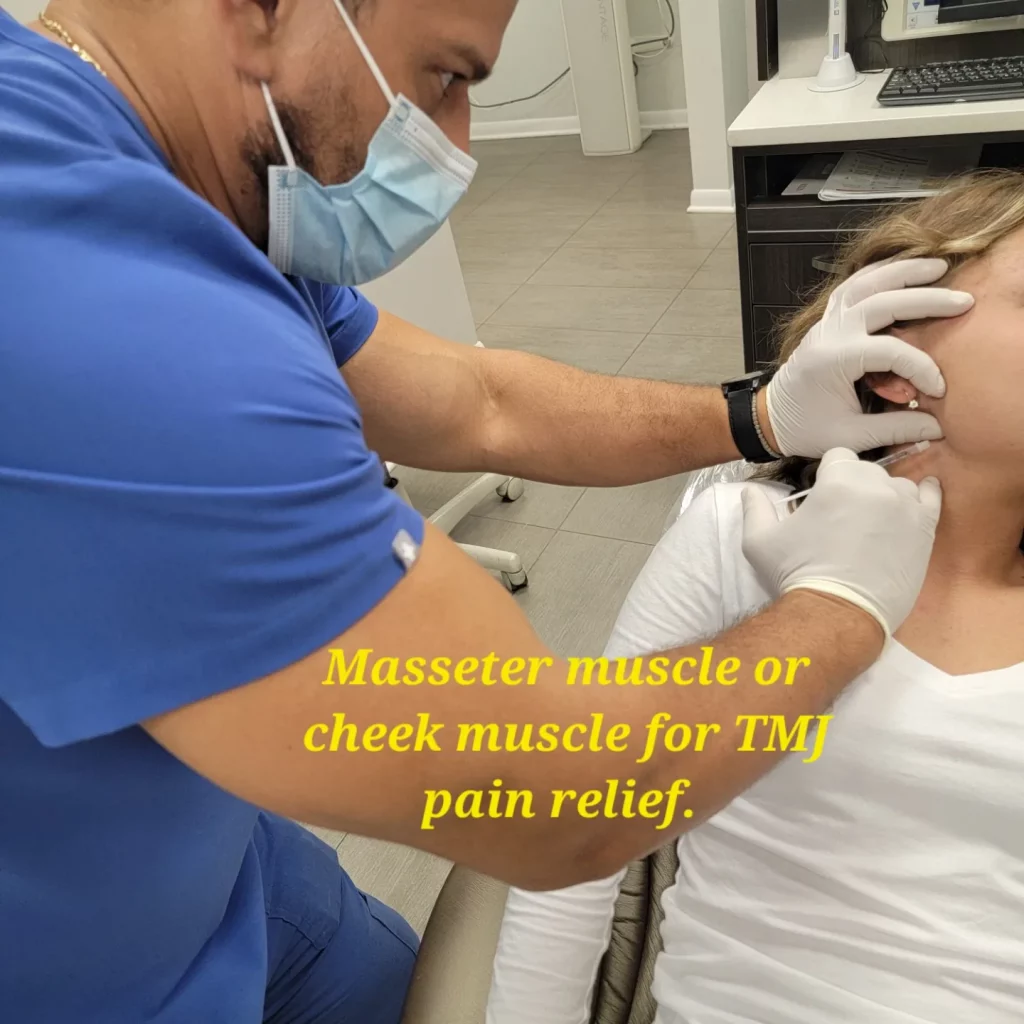
Small doses of Botox placed into the masseter (and sometimes temporalis) muscles reduce their force without affecting chewing or expression. Patients typically feel relief within one to two weeks, lasting three to four months, and many report fewer headaches and less face-widening “square jaw” over time. Dr. Thanasi Loukas trained in this technique through the American Academy of Facial Aesthetics. Read more on our Botox for TMJ page.
Bite adjustment and restoring worn teeth
If a high filling or crown is triggering clenching, a small bite adjustment can solve it. Teeth already worn short or cracked can be rebuilt with bonding or crowns so the bite is level again.
Treating the cause
When grinding is driven by sleep apnea, we screen for it and can make a sleep apnea oral appliance. Anti-inflammatory medication, physical therapy and, rarely, referral to a TMJ specialist round out the options.
Frequently Asked Questions
How do I know if I grind my teeth at night?
Morning jaw soreness, headaches on waking, tooth sensitivity and a partner who hears it are the common clues. Your dentist can confirm it from wear patterns on the teeth.
Can a night guard stop TMJ pain?
For most patients, yes. It stops tooth-on-tooth grinding and lets the jaw muscles rest, which is what relieves the pain. Relief usually builds over two to four weeks of nightly wear.
Does Botox for TMJ change my face?
Treatment doses relax the chewing muscle rather than freezing it, so expression and chewing are normal. Over repeated treatments the masseter can slim slightly, which many patients consider a bonus.
Is TMJ disorder permanent?
Most cases are muscular and respond well to a guard, habit changes and, if needed, Botox. True joint damage is uncommon; even then, symptoms can usually be managed without surgery.
Does insurance cover night guards or TMJ treatment?
Many dental plans cover a custom occlusal guard. Botox for TMJ is usually out-of-pocket; we give you the cost before treatment.
Jaw Pain or Headaches? Get an Evaluation in Park Ridge
A bite and jaw evaluation takes one visit. Call (847) 696-1919 or request an appointment at Loukas Dentistry, 714 W Higgins Rd, Park Ridge, IL 60068 — or start on our TMJ & bruxism treatment page.
Loukas Dentistry is a family and cosmetic Park Ridge dentist practice at 714 W Higgins Rd, Park Ridge, IL 60068.