Botox for Migraines and Chronic Headaches in Park Ridge, IL
Botox & Facial Aesthetics
Botox for Migraines and Chronic Headaches in Park Ridge, IL

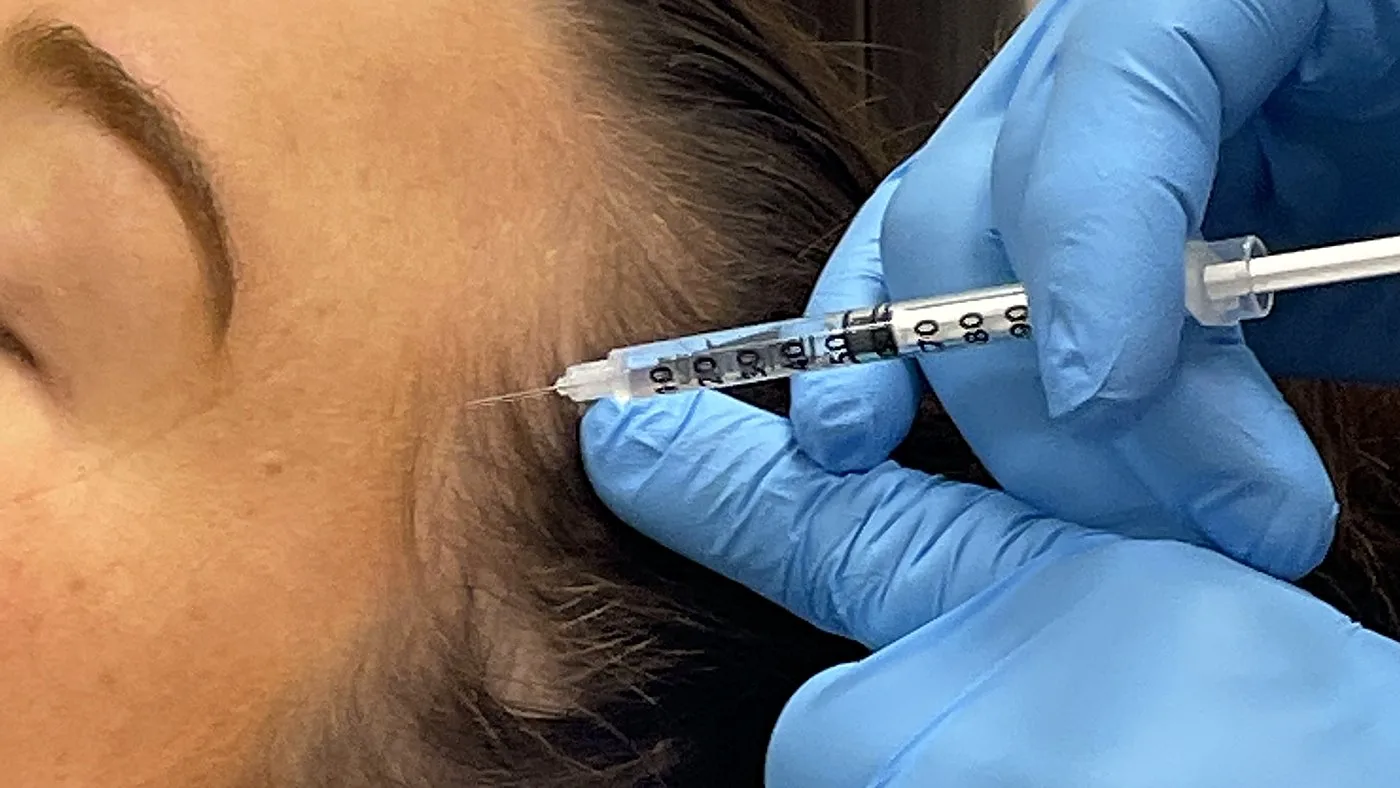
Botox migraine injection points — Dr. Thanasi Loukas, DMD — Loukas Dentistry of Park Ridge
If you suffer from chronic migraines or frequent tension headaches, you may have already tried medications, lifestyle changes, and specialist visits — with limited relief. Botox has emerged as one of the most effective, FDA-approved treatments for chronic migraine prevention, and many patients are discovering that a dentist who already works with facial anatomy and jaw mechanics is uniquely positioned to deliver it.
At Loukas Dentistry of Park Ridge, Dr. Thanasi Loukas offers Botox for chronic migraine and headache prevention as part of a comprehensive facial aesthetics program. As a dentist with advanced training in facial anatomy, temporomandibular joint function, and neuromuscular dentistry, Dr. Loukas brings a clinical perspective to headache treatment that goes beyond what most injectors can offer.
What Is Botox for Migraines?
Botox (botulinum toxin type A) was FDA-approved for chronic migraine prevention in 2010 under the brand name BOTOX® Therapeutic. It is a separate indication from cosmetic Botox, though the injection technique and product are similar.
For migraine treatment, Botox is injected into specific muscle groups around the head, face, and neck. It works by blocking the release of neurotransmitters that activate pain networks — specifically, it prevents the signaling that causes the sensitization of the trigeminal nerve pathway, which is central to migraine pathophysiology.
The result is fewer migraine days, reduced severity when migraines do occur, and in many patients, longer stretches of complete relief over successive treatment cycles.
Important distinction: Botox for chronic migraine is a preventive treatment, not a rescue medication. It reduces how often migraines happen — it does not stop a migraine once it has started. Most patients begin noticing results after their second or third treatment cycle.
Who Qualifies for Botox Migraine Treatment?
Botox is FDA-approved for adults who experience chronic migraine, defined as:
- 15 or more headache days per month
- At least 8 of those days meeting migraine criteria (with or without aura)
- Each headache lasting 4 hours or more
It is not FDA-approved for episodic migraine (fewer than 15 headache days per month), though some providers use it off-label for episodic cases that haven’t responded to other preventive treatments.
If you’ve tried oral preventive medications (beta blockers, antidepressants, anticonvulsants, or CGRP antagonists) and found them ineffective or intolerable, Botox is a meaningful next step that many neurologists and headache specialists now recommend.
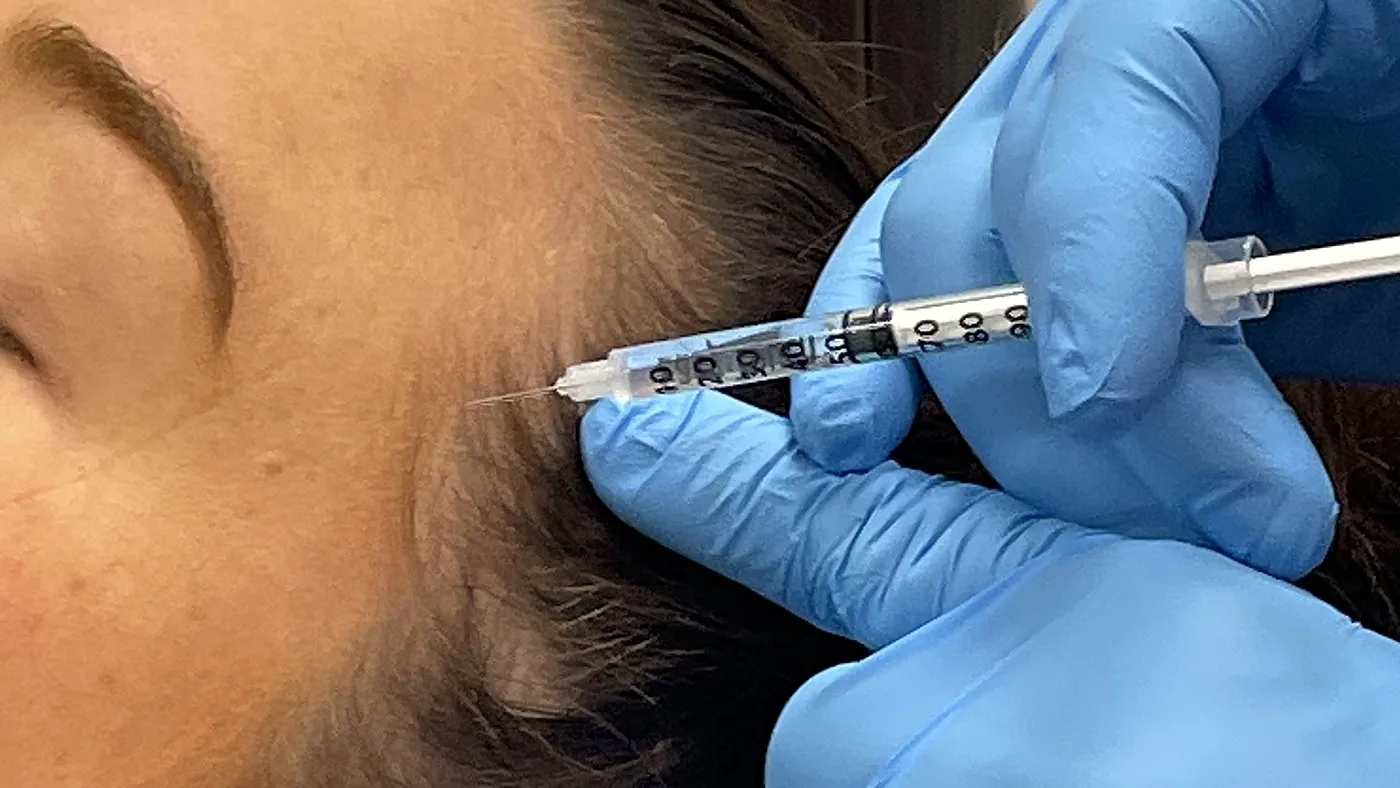
Forehead injection — Dr. Loukas, Park Ridge
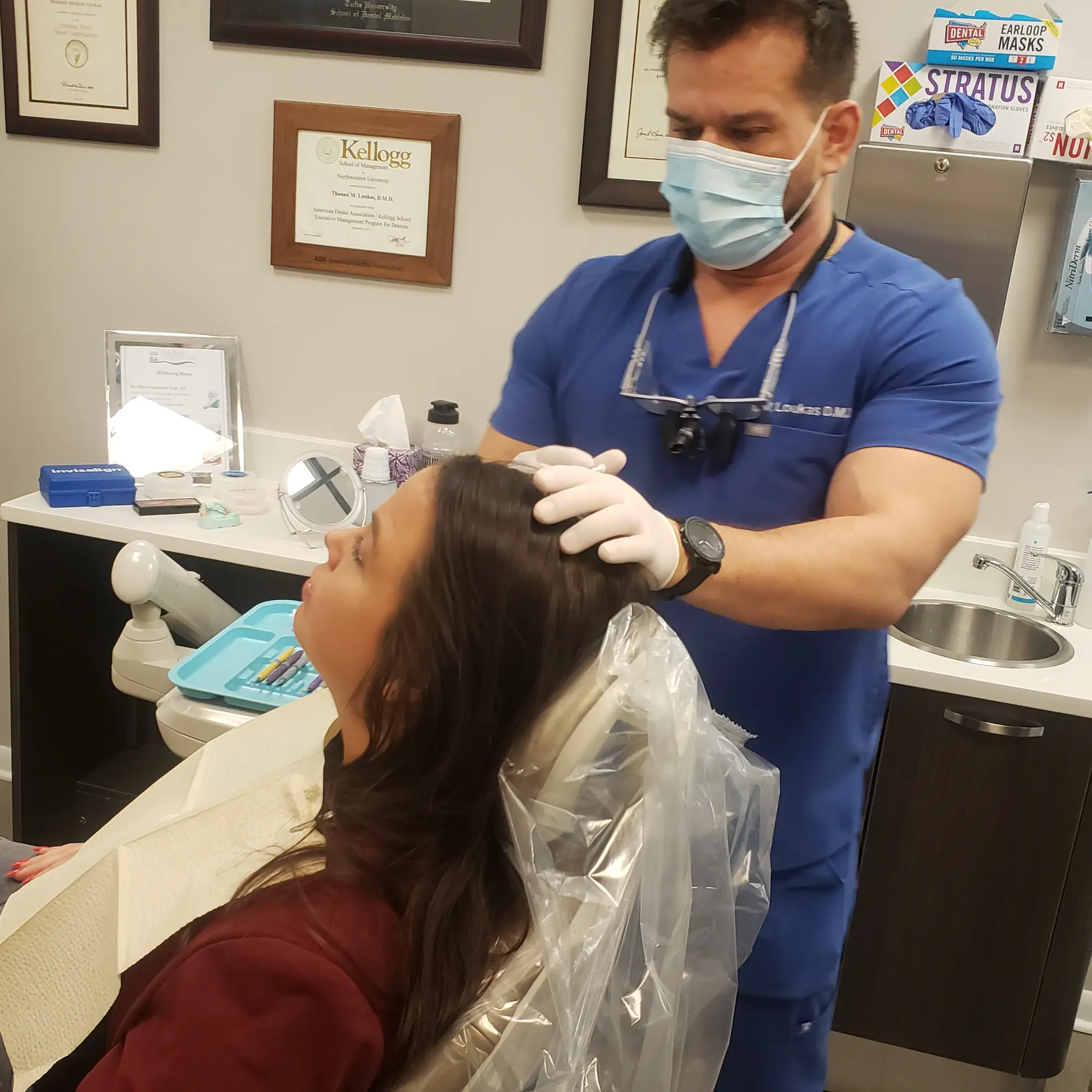
Treatment planning consultation — Dr. Loukas
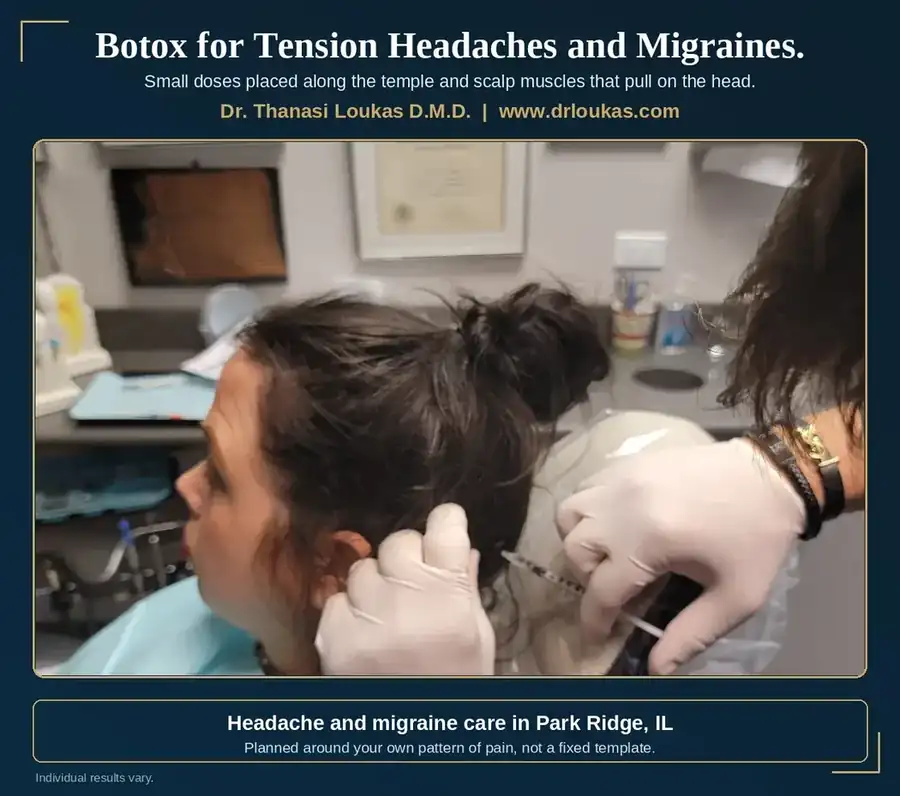
The Injection Points — Where Botox Is Placed for Migraines
The FDA-approved PREEMPT protocol for chronic migraine treatment involves 31 injections across 7 muscle groups, totaling 155 units of Botox. The injection sites are carefully mapped to address the neuromuscular pathways most involved in migraine initiation and propagation.
PREEMPT Protocol — Injection Areas
31 injection sites across 7 muscle groups
Forehead — horizontal lines, frontotemporal headache
Between brows — glabellar tension and frown headache
Temples — temporal pain, jaw clenching headache
Base of skull — occipital neuralgia, neck-origin headache
Back of neck — cervicogenic headache contribution
Upper shoulders — tension referral into the head
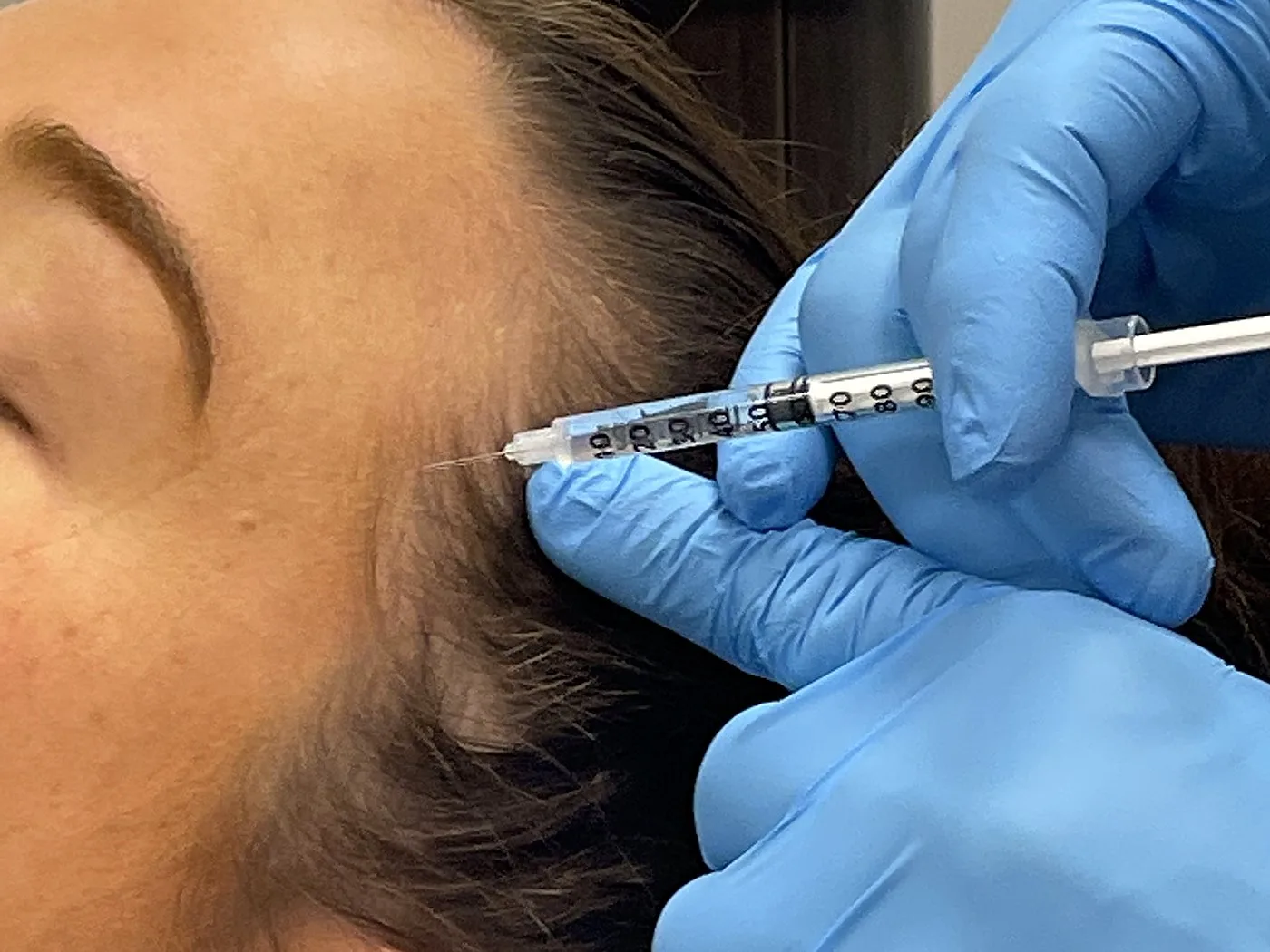
Migraine Botox injection point map — Loukas Dentistry of Park Ridge, IL
Why a Dentist? The Unique Advantage of Seeing Dr. Loukas
This is a question worth answering directly, because it reveals a genuine clinical advantage that most patients don’t know about.
Dentists spend more time studying the anatomy of the head, face, jaw, and neck than virtually any other healthcare professional outside of maxillofacial surgeons. Dr. Loukas has advanced training in the temporomandibular joint, the trigeminal nerve system, masticatory muscle anatomy, and neuromuscular jaw function — all of which are directly implicated in migraine and tension headache pathophysiology.
Specifically, there is a well-documented connection between:
- Bruxism (teeth grinding) and chronic headaches — nighttime clenching activates the temporalis and masseter muscles, creating tension that radiates into the head as morning headaches
- TMJ disorder and migraine — temporomandibular dysfunction can directly trigger or amplify trigeminal nerve sensitization
- Jaw position and cervicogenic headache — malocclusion can create compensatory muscle tension up through the neck and into the occiput
When Dr. Loukas evaluates a patient for Botox headache treatment, he is not just mapping injection sites — he is assessing the whole neuromuscular picture, including whether your jaw, bite, or airway may be contributing to your headache burden.
Clinically relevant: Many patients who come in for migraine Botox also have unrecognized bruxism, TMJ tenderness, or airway restriction that is worsening their headache frequency. Treating only the headache without addressing these contributing factors leaves significant relief on the table. Dr. Loukas evaluates for all of them at your consultation.
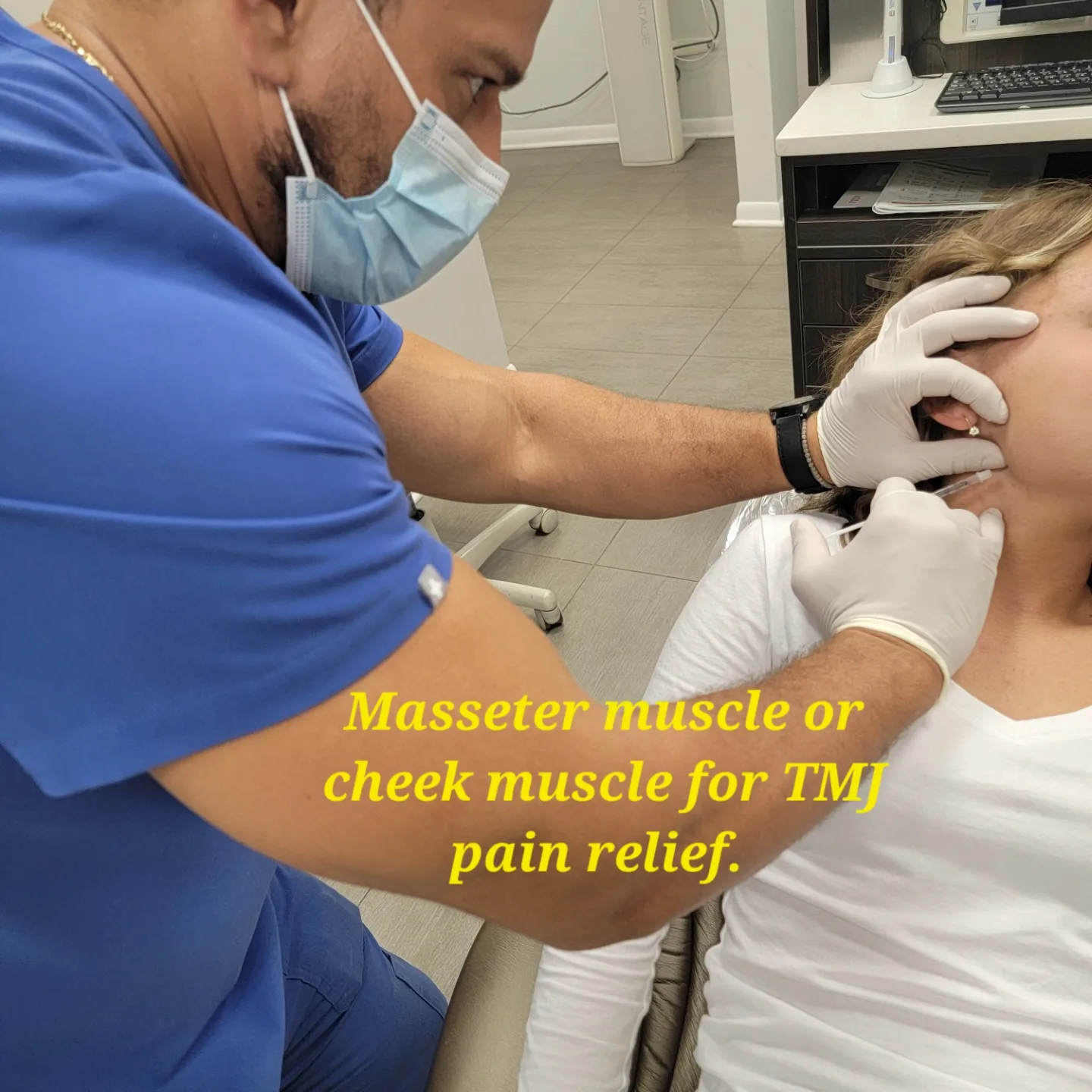
Masseter and TMJ Botox treatment planning — Dr. Loukas evaluates jaw muscle involvement in headache patients
Botox for Tension Headaches vs. Migraines — What’s the Difference?
Patients often arrive unsure which type of headache they have. Here’s a clinically useful distinction:
Chronic Migraine
Typically unilateral (one side), pulsating, moderate to severe intensity, worsened by physical activity. Often accompanied by nausea, vomiting, or sensitivity to light and sound. May have aura (visual disturbances, tingling) before onset. FDA-approved Botox indication with strong clinical evidence.
Chronic Tension-Type Headache
Bilateral, pressing or tightening quality (not pulsating), mild to moderate intensity. No nausea or vomiting. Often described as a band or vice around the head. Not an FDA-approved Botox indication, but Botox is used off-label for tension headaches with meaningful results in some patients — particularly those with significant masseter or temporalis muscle involvement.
Cervicogenic Headache
Originating from the neck and referred into the head. Often one-sided, starting at the base of the skull. Worsened by neck movement. Botox injected into cervical paraspinals and trapezius can significantly reduce cervicogenic headache frequency.
What to Expect — The Treatment Process
- Consultation: Dr. Loukas reviews your headache history, frequency, triggers, and prior treatments. He also assesses your jaw, bite, and muscle tenderness to identify any neuromuscular contributions.
- Treatment planning: The injection map is customized to your headache pattern. Standard PREEMPT protocol is the baseline; modifications are made based on where your pain is concentrated.
- Injections: 31 injections across the forehead, temples, base of skull, neck, and upper shoulders. Each injection takes under a second. Most patients describe the sensation as a very brief pinch. Total treatment time is approximately 20–25 minutes.
- Recovery: No downtime. You can return to normal activities immediately. Mild tenderness at injection sites may last 24–48 hours. Avoid rubbing the treated areas and strenuous exercise for the rest of the day.
- Results timeline: Most patients notice a gradual reduction in headache frequency beginning 2–4 weeks after treatment. The full benefit typically becomes apparent after the second or third treatment cycle.
- Maintenance: Botox for migraine is repeated every 3 months. Efficacy tends to improve with successive treatments as the muscles become progressively retrained.
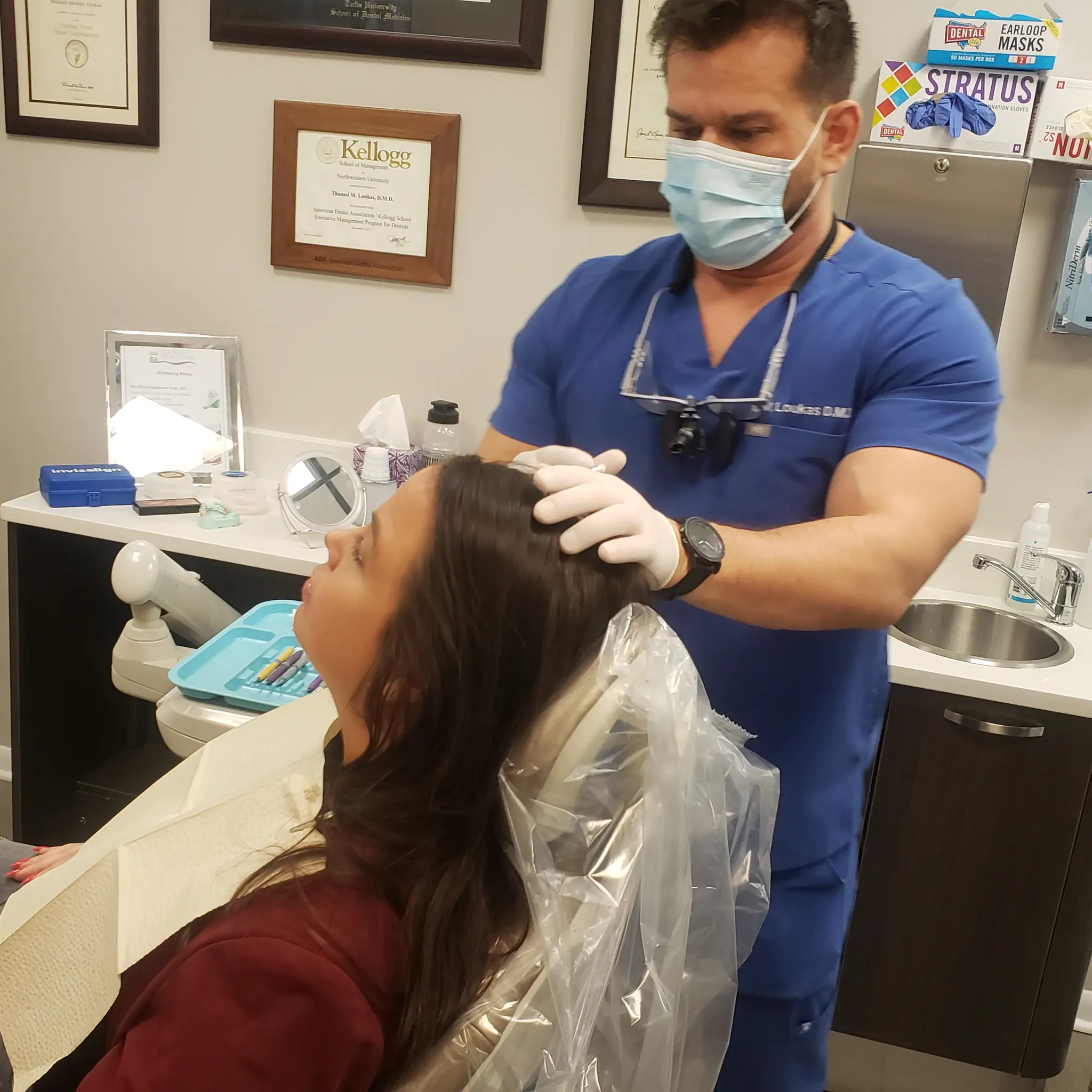
Dr. Loukas performing Botox treatment — Park Ridge, IL
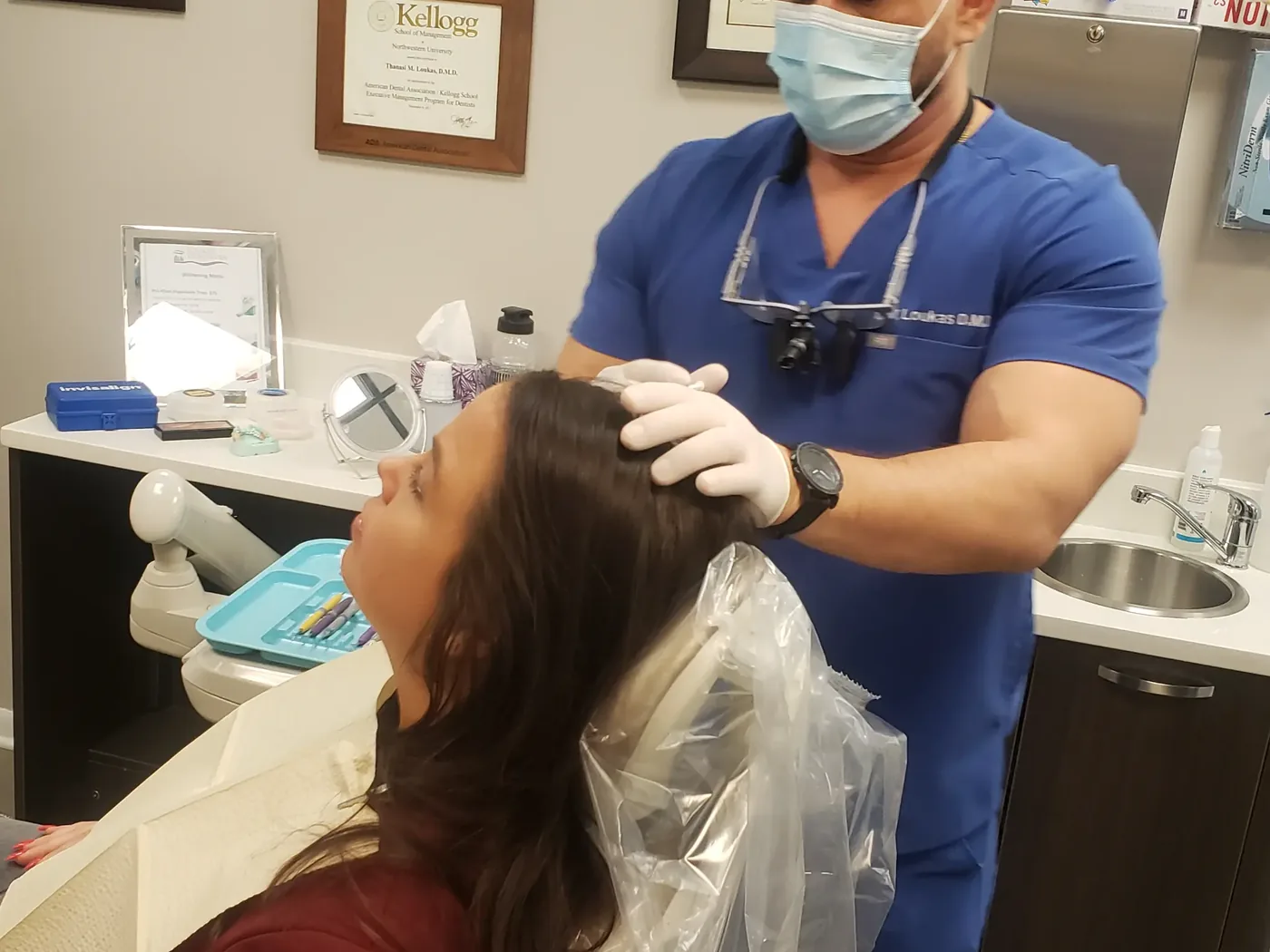
Clinical Botox session — Loukas Dentistry, Park Ridge
Does Insurance Cover Botox for Migraines?
Botox for chronic migraine (not cosmetic Botox) is covered by most major medical insurance plans when properly documented. Coverage typically requires:
- A diagnosis of chronic migraine (15+ headache days/month)
- Documentation of prior preventive medication trials that were ineffective or poorly tolerated
- Submission through medical insurance (not dental insurance)
Our team can assist you in documenting your case for insurance submission. Call (847) 696-1919 to discuss your specific plan and coverage before scheduling.
Ready to Stop Counting Headache Days?
Schedule a Botox migraine consultation with Dr. Thanasi Loukas at Loukas Dentistry of Park Ridge. We’ll review your headache history, assess contributing jaw and muscle factors, and design a treatment plan personalized to your pattern.
Frequently Asked Questions
How many Botox units are needed for migraine treatment?
The FDA-approved PREEMPT protocol uses 155 units of Botox administered across 31 injection sites. This is significantly more than cosmetic Botox, which typically uses 20–50 units. The quantity and placement are specifically designed for headache prevention, not wrinkle reduction.
Will migraine Botox make my face look different?
The injection sites for migraine treatment partially overlap with cosmetic sites (forehead, glabella, temples), so some cosmetic benefit is possible. However, the primary goal is therapeutic — and the dosing is calibrated for muscle relaxation, not cosmetic smoothing. Most migraine patients notice subtle cosmetic improvement as a secondary benefit.
How quickly will I see results?
Botox begins working within 5–14 days of injection. For migraine prevention, the full therapeutic effect develops over 4–6 weeks and typically improves further with each successive treatment cycle. Clinical trials show that by the third cycle, many patients achieve 50% or greater reduction in monthly migraine days.
Can Botox completely eliminate my migraines?
For some patients, yes. Clinical data from the PREEMPT trials showed that approximately 27% of patients who received Botox for chronic migraine were completely headache-free at 24 weeks. Most patients experience meaningful reduction rather than complete elimination. Results vary based on migraine type, contributing factors, and individual response.
What if I also grind my teeth?
This is actually an important conversation to have. Bruxism and migraine are frequently co-occurring, and the masseter and temporalis muscles involved in grinding are also among the key injection sites for migraine treatment. Dr. Loukas can address both simultaneously — the same treatment session can reduce grinding-related jaw tension and headache frequency together.
About the Author: Dr. Thanasi M. Loukas, DMD is a 2006 graduate of Tufts University School of Dental Medicine and owner of Loukas Dentistry of Park Ridge, IL. He is a certified Botox and dermal filler provider with extensive training in facial anatomy, TMJ treatment, and neuromuscular dentistry. He serves patients from Park Ridge, Niles, Des Plaines, Norwood Park, Edison Park, and the Northwest Chicago suburbs. Read Dr. Loukas’s full bio →
Botox for TMJ & Cosmetic ·
TMJ Treatment ·
Sleep Apnea & Airway ·
Dermal Fillers
Headaches That Start in the Jaw
Some chronic headaches trace back to jaw clenching rather than migraine alone. If your headaches come with a sore jaw, morning tightness, or teeth grinding, see our page on Botox for TMJ and jaw pain in Park Ridge, or read the full teeth grinding and TMJ pain guide. Dr. Loukas evaluates both patterns in the same consultation, since treating the jaw muscles sometimes relieves the headaches as well.