Braces and Orthodontics in Park Ridge, IL
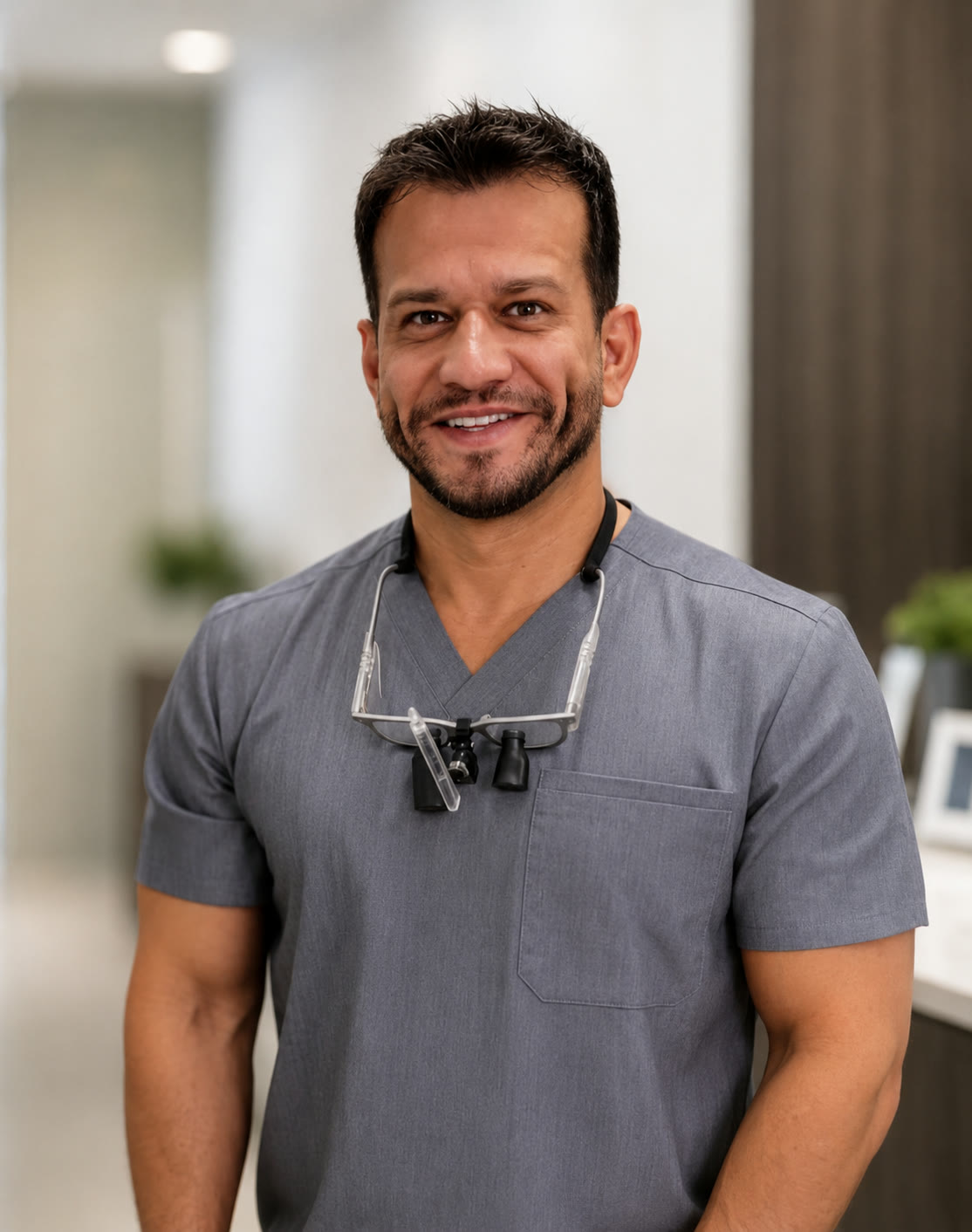
Orthodontics in Park Ridge at Loukas Dentistry covers braces for children, teens and adults, ceramic braces for a less visible option, and retainers that protect the result. Every plan is assessed and supervised in person by Dr. Thanasi Loukas, DMD. If you are looking for clear aligners, see our dedicated Invisalign in Park Ridge, IL page.
Orthodontics in Park Ridge: Traditional Braces
Braces are still the most predictable way to move teeth, and for some cases they are not just an alternative to aligners, they are the better answer. Brackets bonded to each tooth and connected by an archwire give the dentist control over the position of the root, not only the crown. That matters when a tooth has to be uprighted, rotated a long way, or moved bodily through bone.
Braces also work whether or not you remember them. There is nothing to take out and nothing to lose, which is why a patient who knows they would not keep trays in for twenty two hours a day is often better served by a wire.
Clear and Ceramic Braces
Ceramic brackets are tooth colored rather than silver, so they are far less visible across the front of the smile while still being fixed appliances. Patients often call these clear braces, and they are a genuine middle ground for someone who needs the control of brackets but does not want a metal smile in photographs. They are slightly larger than metal brackets and need a little more care with staining foods, coffee and red wine in particular.
Who Is a Good Candidate for Braces?
After an examination and a digital scan, braces are usually the recommendation when a case involves severe crowding, a deep bite or open bite, teeth that need to be rotated a long way, or a bite that needs the roots moved rather than tipped. Children and younger teens whose jaws are still growing often do best with fixed appliances because the dentist can guide growth as it happens. Adults who want the least visible option, or whose movements are mild to moderate, are often better served by aligners, and that is a conversation we have at the consultation rather than a decision made in advance.
How Long Braces Take and What the Visits Involve
Most cases run eighteen to thirty six months, with a short adjustment visit every four to eight weeks. The first appointment is the longest because every bracket is placed and the first wire is fitted. After that the visits are brief. Teeth feel tender for a day or two after each adjustment and then settle.
Cleaning around brackets takes more effort than cleaning a straight tooth, and this is where treatment is either a success or a disappointment. White marks around where the brackets used to be are decalcification, the first stage of decay, and they are permanent. We keep checkups and cleanings running through orthodontic treatment for exactly that reason.
Orthodontics for Children in Park Ridge
A first orthodontic assessment around age seven is worth having even when nothing looks wrong. At that age the first adult molars and incisors are usually in, which is enough to see how the bite is developing, whether there is room for the teeth still to come, and whether a crossbite or a habit is pushing growth in the wrong direction. Most children assessed at seven need nothing done for years. The point is to catch the few who benefit from acting early.
See kids dentistry in Park Ridge, IL for what those visits look like, and preventive dentistry for the sealants and fluoride that protect the teeth while they are being straightened.
Retainers: the Part That Protects the Result
Teeth move for life. They drift back toward their old positions if nothing holds them, and that is equally true after braces and after aligners. A retainer is not an optional extra at the end of treatment, it is what keeps the result you paid for. We fit either a removable retainer, a thin wire bonded behind the lower front teeth, or both, depending on how far the teeth moved and how likely they are to relapse.
Braces Cost in Park Ridge, IL
Comprehensive braces in our office generally fall in a similar range to Invisalign, and the exact fee depends on how far the teeth need to move and how long treatment runs. Most PPO plans that include orthodontic benefits apply to braces, and financing is available. The consultation and digital scan are free, and you leave with a written estimate before anything starts.
Straightening as Part of a Wider Plan
Sometimes alignment is the whole treatment, and sometimes it is the first step. Straightening teeth before restorative work means the crowns or veneers that follow can be a normal thickness instead of being used to disguise a position problem, which is kinder to the tooth underneath. If you are weighing straightening against a cosmetic route, start at cosmetic dentistry in Park Ridge, IL.
Looking for clear aligners rather than braces?
This page covers fixed orthodontics. If you searched for invisible braces or clear braces, what you almost certainly want is Invisalign in Park Ridge, IL, which has cost, timeline, before and after photos and the free digital scan.
Still weighing the two against each other? Read Invisalign versus braces in Park Ridge, IL for a side by side comparison.
Braces in Park Ridge: Frequently Asked Questions
Do you offer braces or only Invisalign?
Both. Loukas Dentistry offers traditional metal braces, ceramic braces and Invisalign clear aligners, and the recommendation depends on your bite, your age and how visible you want the treatment to be. That is decided after an examination and a digital scan, not before.
How long do braces take?
Most comprehensive cases run eighteen to thirty six months, with short adjustment visits every four to eight weeks. Mild cases can finish sooner.
At what age should a child first be assessed for braces?
Around age seven. Most children need nothing done at that stage, but it is the right time to spot a crossbite, crowding or a habit that is affecting jaw growth.
Are ceramic braces as strong as metal braces?
They move teeth the same way and are suitable for most cases. The brackets are slightly larger, can be a little more fragile, and need more care with staining foods, so they are usually placed on the upper front teeth where appearance matters most.
Do I need a retainer after braces?
Yes. Teeth drift back toward their old positions if nothing holds them, so a removable retainer, a bonded wire behind the lower front teeth, or both, is part of every plan.