Dental Fillings in Park Ridge, IL
A Closer Look at Dental Fillings
One of the most common dental procedures performed in the United States, dental fillings are the necessary treatment for small cavities in a tooth. Tooth decay occurs when the acid produced by oral bacteria leach crucial minerals, such as calcium and phosphorus, out of the enamel, softening and infecting the tooth structure. Tooth decay, if left untreated, can cause serious damage to the structure of the tooth and require invasive procedures like root canal therapy or even a tooth extraction to address the problem. Even in its early stages, tooth decay is irreversible for the most part and the infected tooth structure must be removed and replaced with a filling.Types of Dental Fillings
At Loukas Dentistry of Park Ridge, we offer two kinds of dental fillings:- Composite resin or “white” fillings. This plastic-based material is used for both anterior (front of the mouth) and posterior (back of the mouth) restorations. Due to the improvement in the strength, lack of sensitivity, and life-like esthetics it offers, this material is used almost exclusively and is preferred by most patients.
- Amalgam or “silver” fillings. Developed in the 19th century as an affordable material for filling in cavities, dental amalgam is a mixture of silver, mercury, copper, and other metals. Despite a great deal of controversy, the mercury used in dental amalgam is completely inert and safe for the patient. In no way does mercury from a filling have any detrimental effects on the patient. While amalgam fillings have been largely overtaken but composite resin fillings, amalgam still has its place in restorative dentistry.
Cavity Fillings: What to Expect
Treating a cavity in our Park Ridge office is usually a single visit: we numb the area, remove the decayed portion of the tooth, and place a tooth-colored composite filling that is shaped and polished to blend in with your natural enamel. Most patients are back to their day within the hour, and the numbness wears off within a few hours.
Composite vs. Metal Fillings
We place tooth-colored composite fillings rather than silver amalgam. Composite bonds directly to the tooth, requires less drilling, and is virtually invisible when you smile. If you have older metal fillings that are worn, cracked or visible when you talk, we can replace them with composite restorations.
Do Cavities Always Need a Filling?
Small early-stage decay can sometimes be slowed with fluoride and better home care, which is why regular checkups and cleanings matter. Once a cavity forms, a filling is the standard fix; decay that is left alone only grows, and a large cavity may eventually need a crown or root canal instead of a simple filling. We also treat cavities in children with the same gentle approach. See our home-care guide for preventing the next one.
Think you have a cavity? Call Loukas Dentistry at (847) 696-1919 or visit us at 714 W Higgins Rd, Park Ridge, IL 60068.
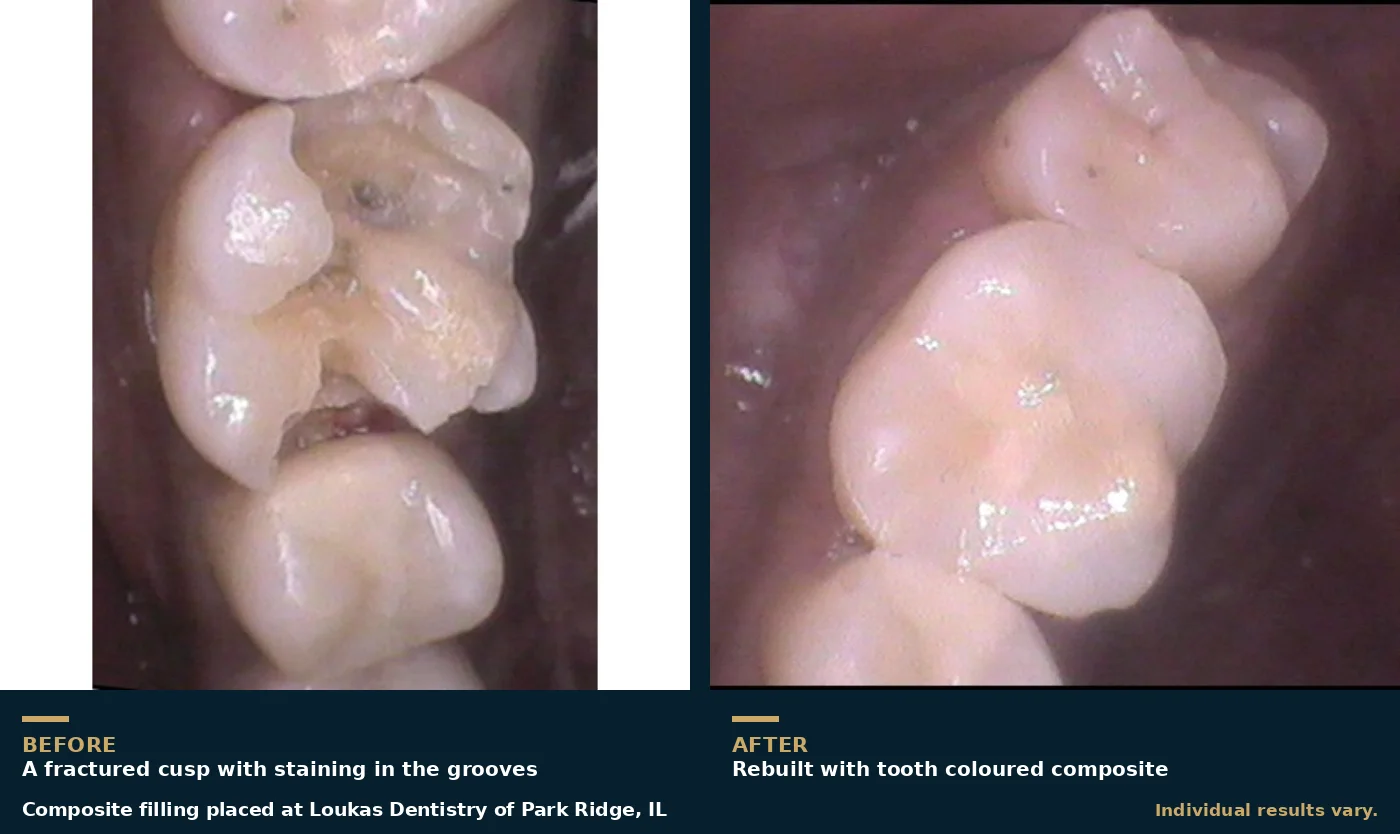
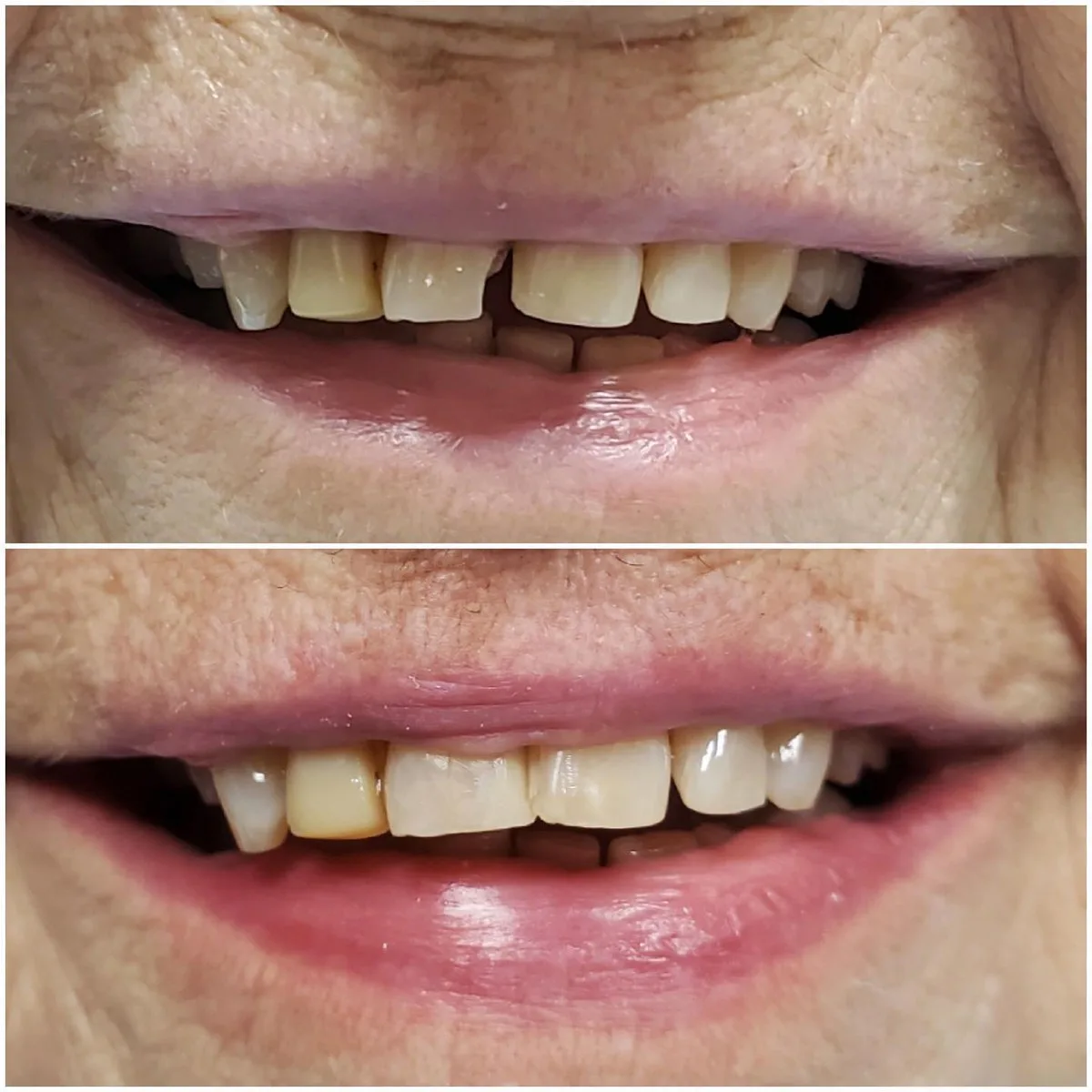
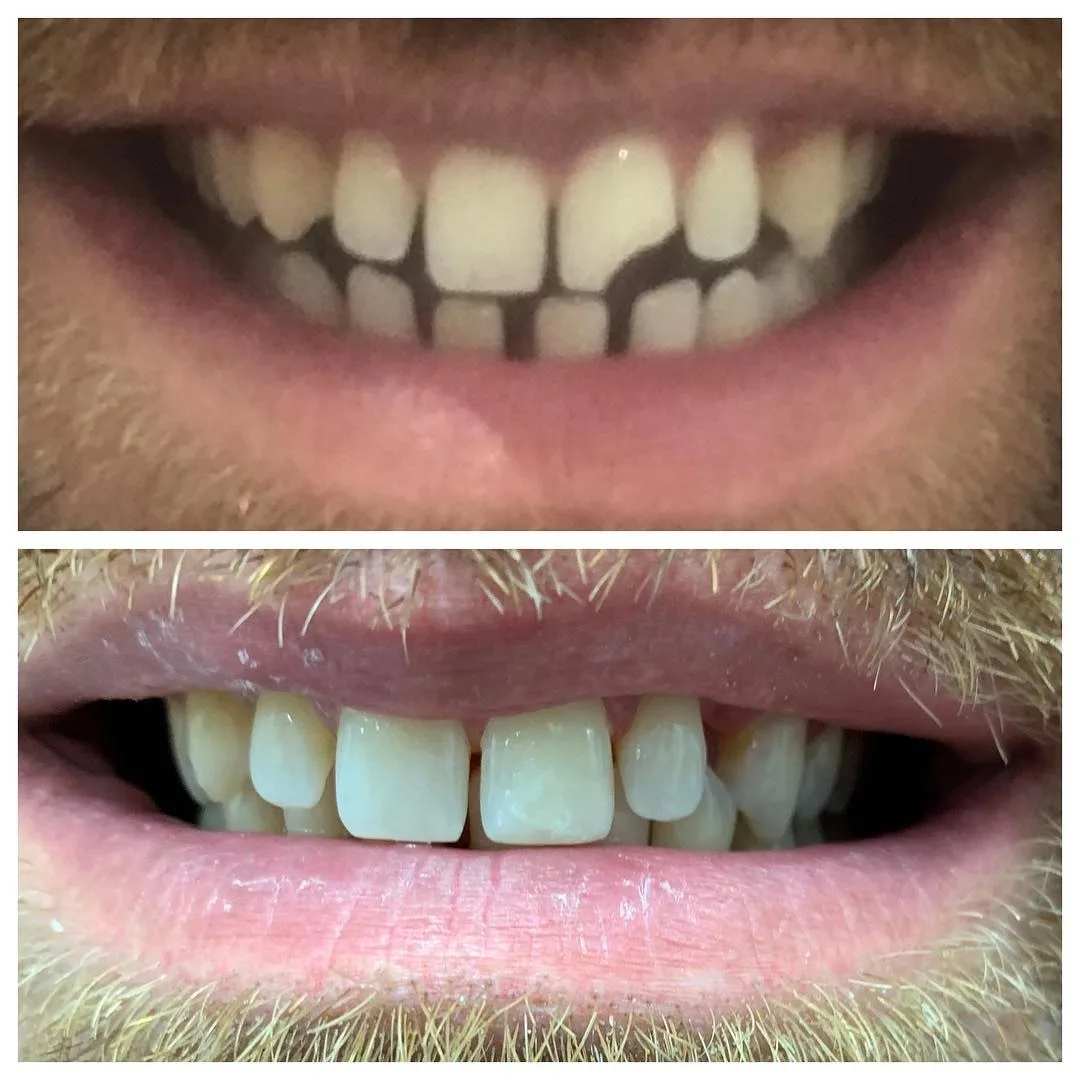
Composite Fillings Before and After
Real cases treated at our Park Ridge office. Tooth colored composite is shaped and cured directly on the tooth, so the repair is finished in a single visit and matched to the shade of the teeth around it.
Dental Filling Questions We Hear in Park Ridge
How long do composite fillings last?
A well placed composite filling commonly lasts many years. Lifespan depends on the size of the filling, where it sits in the bite, and whether you grind your teeth. Small fillings in low stress areas last longest.
Should I replace my old silver fillings?
Not automatically. An intact amalgam filling that is sealing well does not need replacing simply because it is metal. We replace them when there is decay underneath, a crack, a failing margin, or when you want the appearance changed.
Does getting a filling hurt?
The area is numbed first, so the procedure itself is comfortable. Some teeth are sensitive to cold for a week or two afterwards, which settles on its own. Tell us if sensitivity is getting worse rather than better.
Can a cavity heal without a filling?
Very early demineralisation, before a hole has formed, can sometimes be remineralised with fluoride and better home care. Once the enamel surface has broken down it does not repair itself and a filling is the conservative fix.
What if the cavity is too big for a filling?
When too much tooth structure is gone, a filling has nothing solid to hold onto and will fail. In that case an onlay or a crown restores the tooth properly. Dr. Loukas will show you the image and explain which one the tooth needs.